World's First Subway Opens: London Underground Begins
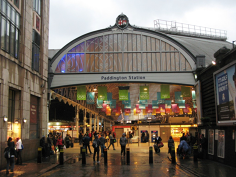
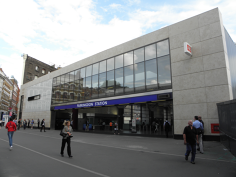
Thirty-eight thousand passengers rode the world''s first underground railway on its opening day, January 10, 1863, packing into gas-lit wooden carriages pulled by steam locomotives through shallow tunnels just beneath London''s streets. They emerged at the other end blackened by soot and coughing from the smoke, and they kept coming back the next day, and the next, because the alternative was London''s catastrophic surface traffic, where horse-drawn omnibuses moved slower than walking pace during peak hours. The Metropolitan Railway ran between Paddington and Farringdon Street, a distance of approximately 3.75 miles with seven stations. The tunnels were built using the cut-and-cover method: workers dug a trench along the street, built the tunnel walls and roof, then covered it back up and repaved the road above. The construction disrupted London for years, demolished hundreds of buildings, and displaced thousands of residents, most of them poor. The Fleet River sewer burst into the workings in 1862, flooding the tunnel with raw sewage and delaying the opening by months. Charles Pearson, the London solicitor who had championed the underground railway concept for twenty years, died in September 1862, just four months before opening day. He never rode the train he fought for. Pearson had envisioned the underground as a tool for social reform, allowing working-class families to live in cheaper suburban housing while commuting to jobs in central London. That vision proved correct, though it took decades to fully materialize. The ventilation problem was never fully solved during the steam era. Despite periodic openings to the surface and experimental solutions, the tunnels filled with suffocating smoke. Drivers and station staff suffered chronic respiratory problems. Electrification, which began in 1890 with the City and South London Railway, eventually eliminated the smoke. Other cities followed London''s example: Budapest in 1896, Glasgow and Boston in 1897, Paris in 1900, New York in 1904. Every urban metro system in the world descends from this first smoky tunnel beneath Victorian London.
January 10, 1863
163 years ago
Key Figures & Places
What Else Happened on January 10
Julius Caesar marched his Thirteenth Legion across the Rubicon, defying the Roman Senate’s direct order to disband his army. This breach of provincial boundarie…
The imperial throne wasn't just changing hands—it was being seized through cosmic theater. Wang Mang, a cunning court official, didn't just stage a coup; he cla…
Julius Caesar marched his Thirteenth Legion across the Rubicon, defying the Roman Senate’s direct order to disband his army. By crossing this boundary, he commi…
Emperor Galba adopted Lucius Calpurnius Piso Licinianus as his successor, hoping to stabilize a fractured Roman state through a formal transfer of power. Instea…
Fabian ascended to the papacy after a dove reportedly landed on his head during the election, an omen that convinced the gathered crowd of his divine selection.…
A dusty, brutal siege that nobody saw coming. Norman mercenaries—those French warriors who'd become Italy's most unexpected conquerors—thundered into Sicily's m…
Talk to History
Have a conversation with historical figures who witnessed this era. Ask questions, explore perspectives, and bring history to life.