

Housing Discrimination Ends: Johnson Signs Civil Rights Act
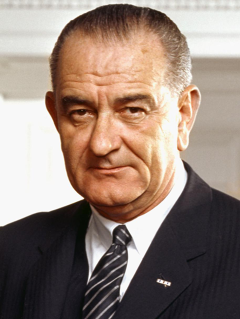
One week after an assassin's bullet killed Martin Luther King Jr. in Memphis, President Lyndon Johnson signed the Civil Rights Act of 1968 on April 11, turning grief into legislation. The bill, which had languished in Congress for two years, sailed through in the wave of national anguish that followed King's murder on April 4. Title VIII of the act, known as the Fair Housing Act, prohibited discrimination in the sale, rental, and financing of housing based on race, religion, national origin, and sex. Housing segregation in America was not an accident of economics or personal preference. Federal policy had actively enforced it for decades. The Home Owners' Loan Corporation created color-coded maps in the 1930s that rated neighborhoods by racial composition, a practice called redlining that denied mortgages to Black families in white areas. The Federal Housing Administration refused to insure loans in integrated neighborhoods, and restrictive covenants written into property deeds legally barred non-white buyers well into the 1960s. King had made fair housing a central cause after leading marches through Chicago's white neighborhoods in 1966, where he encountered mobs throwing rocks and bottles. He later said he had never seen such hatred, even in Mississippi. The Chicago campaign exposed Northern segregation as violently maintained as its Southern counterpart, but Congress remained reluctant to act on housing discrimination, which touched white homeowners' property values far more directly than lunch counter integration. Johnson signed the bill in a somber White House ceremony as cities across America still smoldered from the riots that erupted after King's assassination. The act gave the Department of Housing and Urban Development authority to investigate complaints and created federal penalties for interfering with housing rights. Enforcement proved slow and underfunded for decades, but the law established the legal principle that where Americans live should not be determined by the color of their skin.
April 11, 1968
58 years ago
Key Figures & Places



What Else Happened on April 11
She handed him a crown he'd never asked for, then demanded he count every coin in the treasury before accepting. Anastasius didn't just inherit a throne; he inh…
King Bolesław II of Poland ordered the execution of Bishop Stanislaus of Kraków after a bitter dispute over land and the monarch's moral conduct. This act of vi…
Batu Khan’s Mongol forces crushed King Béla IV’s army at the Battle of Muhi, shattering the Hungarian military and leaving the kingdom defenseless against a bru…
Gaston de Foix led a Franco-Ferrarese army to a bloody victory over Papal-Spanish forces at Ravenna, the deadliest battle in Europe since antiquity, with over 1…
Gaston de Foix crushed the Spanish and Papal armies at the Battle of Ravenna, utilizing mobile field artillery to shatter enemy infantry formations. While the F…
They dug into the mud near Ceresole and didn't stop until the Spanish pikes shattered. Francis I's troops crushed 12,000 men, leaving a mountain of dead that sm…
Talk to History
Have a conversation with historical figures who witnessed this era. Ask questions, explore perspectives, and bring history to life.