Napoleon Exiled to Elba: The Empire's Brief End
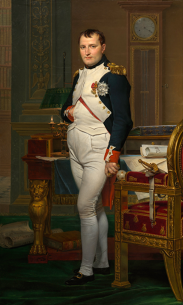
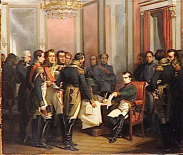
Napoleon Bonaparte signed away an empire with a stroke of ink. The Treaty of Fontainebleau, finalized on April 11, 1814, stripped the man who had dominated European politics for nearly two decades of everything except a tiny Mediterranean island and an annual pension of two million francs. Six days earlier, marshals Ney, Lefebvre, and Macdonald had confronted their emperor at Fontainebleau Palace, refusing to march on Paris. The allied armies of Russia, Prussia, Austria, and Britain had already occupied the French capital, and the Senate had declared Napoleon deposed. The treaty granted Napoleon sovereignty over Elba, an island of 12,000 inhabitants off the Tuscan coast. He was permitted to retain his imperial title, keep a personal guard of 400 soldiers, and receive his pension from the French treasury. His wife Marie Louise received the Duchy of Parma. The terms were remarkably generous for a man who had plunged Europe into wars that killed millions. Napoleon arrived on Elba in May 1814 and threw himself into governing with characteristic energy, reorganizing the island's iron mines, road system, and small military force. But he watched from across the water as the restored Bourbon monarchy under Louis XVIII alienated the French public with reactionary policies and as the Congress of Vienna carved up his former empire. Within eleven months, Napoleon escaped Elba with roughly a thousand men, landed on the French coast near Antibes, and marched to Paris in what became the Hundred Days. The treaty that was supposed to end his career merely interrupted it. His final defeat would come at Waterloo in June 1815, after which the allies chose a far less comfortable exile: the remote South Atlantic island of Saint Helena, where he died in 1821.
April 11, 1814
212 years ago
Key Figures & Places
What Else Happened on April 11
She handed him a crown he'd never asked for, then demanded he count every coin in the treasury before accepting. Anastasius didn't just inherit a throne; he inh…
King Bolesław II of Poland ordered the execution of Bishop Stanislaus of Kraków after a bitter dispute over land and the monarch's moral conduct. This act of vi…
Batu Khan’s Mongol forces crushed King Béla IV’s army at the Battle of Muhi, shattering the Hungarian military and leaving the kingdom defenseless against a bru…
Gaston de Foix led a Franco-Ferrarese army to a bloody victory over Papal-Spanish forces at Ravenna, the deadliest battle in Europe since antiquity, with over 1…
Gaston de Foix crushed the Spanish and Papal armies at the Battle of Ravenna, utilizing mobile field artillery to shatter enemy infantry formations. While the F…
They dug into the mud near Ceresole and didn't stop until the Spanish pikes shattered. Francis I's troops crushed 12,000 men, leaving a mountain of dead that sm…
Talk to History
Have a conversation with historical figures who witnessed this era. Ask questions, explore perspectives, and bring history to life.