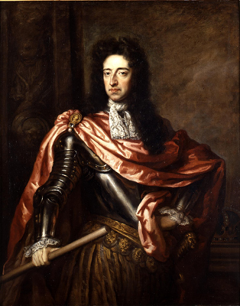
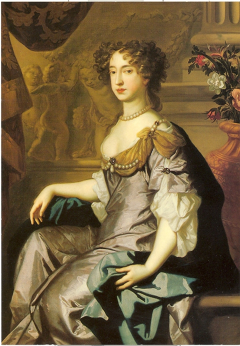
William and Mary Crowned: Britain's Constitutional Monarchy Begins
A crown was offered, but it came with strings that would reshape British governance forever. William III of Orange and his wife Mary II were crowned joint monarchs on April 11, 1689, but only after accepting the Declaration of Rights, a document that fundamentally redefined the relationship between the English crown and Parliament. No previous coronation had demanded such concessions as a precondition for wearing the crown. The crisis that produced this arrangement had unfolded rapidly. Mary's father, the Catholic James II, had fled to France in December 1688 after William's invasion force landed at Torbay with 15,000 troops. James's own army had melted away, and his Protestant daughter Mary sided with her Dutch husband over her father. Parliament declared the throne vacant and drafted the Declaration of Rights, which prohibited the monarch from suspending laws, levying taxes, or maintaining a standing army without parliamentary consent. The coronation ceremony at Westminster Abbey was conducted by Henry Compton, Bishop of London, after the Archbishop of Canterbury refused to officiate. Both William and Mary took a modified oath that bound them to govern according to Parliament's statutes rather than by divine right. William, whose primary interest was dragging England into his continental war against Louis XIV of France, accepted these limitations as the price of gaining English military resources. The Declaration of Rights was codified as the Bill of Rights in December 1689, becoming a cornerstone of constitutional law that would influence the American Bill of Rights a century later. The principle that monarchs rule by consent of Parliament, not by divine appointment, became permanent. Britain's constitutional monarchy traces its legal foundation to this coronation, the moment when a crown became something Parliament could bestow and, by implication, withdraw.
April 11, 1689
337 years ago
Key Figures & Places

What Else Happened on April 11
She handed him a crown he'd never asked for, then demanded he count every coin in the treasury before accepting. Anastasius didn't just inherit a throne; he inh…
King Bolesław II of Poland ordered the execution of Bishop Stanislaus of Kraków after a bitter dispute over land and the monarch's moral conduct. This act of vi…
Batu Khan’s Mongol forces crushed King Béla IV’s army at the Battle of Muhi, shattering the Hungarian military and leaving the kingdom defenseless against a bru…
Gaston de Foix led a Franco-Ferrarese army to a bloody victory over Papal-Spanish forces at Ravenna, the deadliest battle in Europe since antiquity, with over 1…
Gaston de Foix crushed the Spanish and Papal armies at the Battle of Ravenna, utilizing mobile field artillery to shatter enemy infantry formations. While the F…
They dug into the mud near Ceresole and didn't stop until the Spanish pikes shattered. Francis I's troops crushed 12,000 men, leaving a mountain of dead that sm…
Talk to History
Have a conversation with historical figures who witnessed this era. Ask questions, explore perspectives, and bring history to life.