

Sepoys Revolt in Meerut: India Challenges British Rule
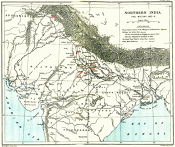
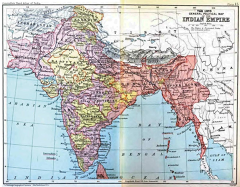
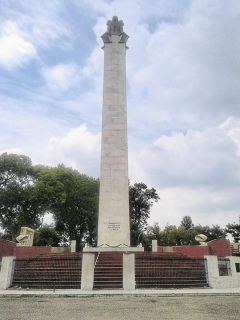
Indian soldiers in the Bengal Army began refusing to load the new Enfield rifle cartridges in April 1857, and by May 10 the refusal had escalated into a full-scale mutiny at Meerut that challenged British control over the subcontinent. The cartridges were greased with animal fat, and soldiers had to bite off the paper end before loading. Hindu sepoys believed the grease was cow tallow, sacred and untouchable. Muslim sepoys believed it was pork lard, forbidden and defiling. British officers dismissed these concerns as superstition. The dismissal cost them an empire. The cartridge controversy was the spark, not the cause. Indian soldiers had accumulated decades of grievances under the East India Company's rule. Pay was low, promotion to officer rank was impossible regardless of merit or experience, and British cultural arrogance had intensified under the Governor-Generalship of Lord Dalhousie, who had annexed Indian kingdoms through the Doctrine of Lapse and imposed Western legal and educational reforms with minimal consultation. Many Indian soldiers feared that the British intended to forcibly convert them to Christianity. The Meerut mutiny on May 10, 1857, began when 85 sepoys who had refused the cartridges were sentenced to ten years' hard labor and publicly stripped of their uniforms. Their comrades broke them out of prison, killed every British officer and civilian they could find, and marched on Delhi, where they installed the aged Mughal emperor Bahadur Shah II as the symbolic leader of the rebellion. The revolt spread across northern India within weeks, with major sieges at Delhi, Lucknow, and Cawnpore. The British response was characterized by both military effectiveness and retaliatory savagery. The recapture of Delhi in September 1857 involved street-by-street fighting and was followed by mass executions and the looting of the city. At Cawnpore, where Indian forces had massacred British women and children after a negotiated surrender, British troops killed prisoners indiscriminately and forced captured rebels to lick blood from the floors before execution. The violence on both sides exceeded anything seen in India since the Mughal invasions. The rebellion's suppression ended the East India Company's rule. The Government of India Act 1858 transferred control to the British Crown, beginning the period of direct colonial governance known as the British Raj.
April 10, 1857
169 years ago
Key Figures & Places

What Else Happened on April 10
He arrived in Constantinople with a head full of Greek philosophy and zero patience for compromise. Within months, he was preaching that Mary was merely the mot…

Halley's Comet passed within 5.1 million kilometers of Earth on April 10, 837 AD, its closest recorded approach in over two thousand years of observation. The c…
Louis III and Carloman II ascended the throne as joint kings of the Western Franks, inheriting a fractured realm following the death of their father, Louis the …
J. Sterling Morton convinced his fellow Nebraskans to plant over a million trees on this day, transforming the state’s treeless, wind-swept plains. This grassro…
He arrived with twelve thousand disciples, marching through Nanjing's dust to meet an emperor who wanted peace more than war. Deshin Shekpa didn't just preach; …
Swiss mercenaries didn't just take his sword; they took the man himself for forty thousand ducats, dumping him right into French hands at Novara. Ludovico Sforz…
Talk to History
Have a conversation with historical figures who witnessed this era. Ask questions, explore perspectives, and bring history to life.