

NASA Picks the Mercury Seven: America's First Astronauts
NASA announced the selection of its first seven astronauts, a group the press immediately christened the "Mercury Seven." This roster launched the American human spaceflight program and set the specific trajectory for the nation's race against the Soviet Union to reach orbit.
April 9, 1959
67 years ago
Key Figures & Places
NASA
Wikipedia
Project Mercury
Wikipedia
Astronaut
Wikipedia
Mercury program
Wikipedia
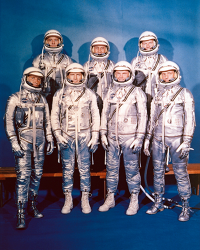
Mercury Seven
Wikipedia
Project Mercury
Wikipedia

NASA
Wikipedia

Astronaut
Wikipedia

Mercury Seven
Wikipedia

Alan Shepard
Wikipedia

Gus Grissom
Wikipedia

John Glenn
Wikipedia

Scott Carpenter
Wikipedia

Wally Schirra
Wikipedia

Deke Slayton
Wikipedia

Gordon Cooper
Wikipedia

United States
Wikipedia
What Else Happened on April 9
Antiochia am Orontes wird durch ein Erdbeben zerstört.
Dong Zhuo met le feu à Luoyang dans le cadre de la campagne menée contre lui.
A legion in Illyricum shouted "Severus Augustus!" before anyone else knew the old emperor was dead. They didn't wait for the Senate; they grabbed a sword and cl…
Sixteen legions marched out of Illyricum, not to defend the frontier, but to burn down the old guard. While Commodus lay dead in Rome, Severus's soldiers realiz…
He handed out a letter promising peace by erasing the word "two natures." Emperor Basiliscus, backed by his wife and the powerful Patriarch Peter the Fuller, de…
1,600 cavalrymen arrived, mostly Huns and Slavs with bows that could punch through Gothic armor. Belisarius didn't wait for supplies to fill his bellies; he str…
Talk to History
Have a conversation with historical figures who witnessed this era. Ask questions, explore perspectives, and bring history to life.