
Bataan Falls: The March of Death Begins
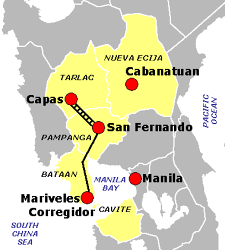
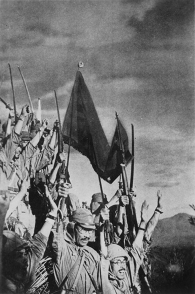
The surrender of approximately 76,000 American and Filipino troops on the Bataan Peninsula on April 9, 1942, was the largest capitulation in American military history. General Edward King Jr. surrendered the Bataan garrison to Japanese General Masaharu Homma after three months of fighting without adequate food, medicine, or ammunition. What followed was a forced march of 66 miles to Camp O'Donnell that killed between 6,000 and 18,000 prisoners through execution, starvation, disease, and exhaustion. The Bataan Death March became one of the defining war crimes of the Pacific theater. The defense of Bataan had been heroic and futile. General Douglas MacArthur's War Plan Orange called for a fighting retreat to the Bataan Peninsula and the fortified island of Corregidor, where American and Filipino forces would hold out until reinforcements arrived from Hawaii. The reinforcements never came. After Pearl Harbor, the Pacific Fleet was crippled, and the war's early months produced an unbroken string of Japanese victories across Southeast Asia. President Roosevelt ordered MacArthur evacuated to Australia in March 1942, leaving General Jonathan Wainwright in overall command and King directing the Bataan garrison. The troops who surrendered were already in desperate condition. Rations had been cut to one-third of normal by January and further reduced as supplies dwindled. Malaria, dysentery, and beriberi were epidemic. Many soldiers could barely walk before the march began. Japanese forces, who had expected a garrison of 25,000 and instead received three times that number, had made no logistical preparations for feeding or transporting the prisoners. The march itself was conducted with systematic cruelty. Japanese guards bayoneted prisoners who fell behind or stopped to drink water. Groups of prisoners were executed arbitrarily. Filipino civilians who attempted to give food or water to the marchers were beaten or killed. The sun was brutal, temperatures exceeded 100 degrees Fahrenheit, and the prisoners had no shade, no water, and no rest stops for stretches of 12 to 18 hours. Many who survived the march died within weeks at Camp O'Donnell, where conditions were equally lethal. General Homma was tried for war crimes by a U.S. military commission in Manila after the war and executed by firing squad on April 3, 1946.
April 9, 1942
84 years ago
Key Figures & Places

United States
Wikipedia

Royal Navy
Wikipedia
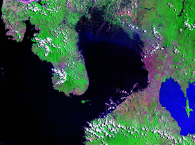
Bataan Peninsula
Wikipedia

Sri Lanka
Wikipedia
Ceylon
Wikipedia

Imperial Japanese Navy
Wikipedia
destroyer
Wikipedia
aircraft carrier
Wikipedia
Royal Australian Navy
Wikipedia
Bataan Death March
Wikipedia
Battle of Bataan
Wikipedia
Trincomalee
Wikipedia
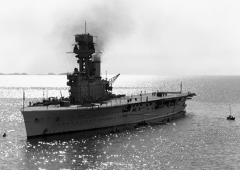
HMS Hermes (95)
Wikipedia
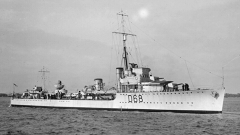
HMAS Vampire (D68)
Wikipedia
What Else Happened on April 9
A legion in Illyricum shouted "Severus Augustus!" before anyone else knew the old emperor was dead. They didn't wait for the Senate; they grabbed a sword and cl…
Sixteen legions marched out of Illyricum, not to defend the frontier, but to burn down the old guard. While Commodus lay dead in Rome, Severus's soldiers realiz…
Emperor Basiliscus issued the Enkyklikon on April 9, 475 AD, a circular letter to the bishops of the Byzantine Empire demanding their acceptance of the Monophys…
1,600 cavalrymen arrived, mostly Huns and Slavs with bows that could punch through Gothic armor. Belisarius didn't wait for supplies to fill his bellies; he str…
Mongol tumens crushed a coalition of Polish and German knights at the Battle of Liegnitz, securing a total tactical victory through superior mobility and feigne…
Stakes were literally underwater in 1288 when Tran forces drove sharp bamboo stakes into the riverbed of Bach Dang. The Yuan fleet, packed with war elephants an…
Talk to History
Have a conversation with historical figures who witnessed this era. Ask questions, explore perspectives, and bring history to life.