Senate Ratifies Alaska Purchase: Seward's Folly Vindicated
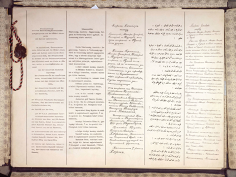
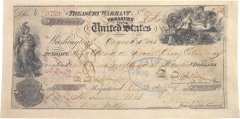
Secretary of State William Seward negotiated the purchase of Alaska from Russia for $7.2 million on March 30, 1867, and the Senate ratified the treaty on April 9 by a vote of 37 to 2. The purchase price worked out to roughly two cents per acre for 586,412 square miles of territory, nearly one-fifth the size of the existing United States. Critics called it "Seward's Folly," "Seward's Icebox," and "Andrew Johnson's Polar Bear Garden." Editorial cartoonists depicted Seward hauling blocks of ice to Washington. The mockery lasted until gold was discovered in the Klondike in 1896. Russia's decision to sell was driven by strategic calculation rather than indifference. The Russian-American Company, which administered Alaska, had been losing money for years, and Russia's fur trade in the territory was declining as sea otter and fur seal populations were hunted to near extinction. More critically, Russia had lost the Crimean War in 1856 and feared that Britain, whose colony of British Columbia bordered Alaska, might seize the territory in a future conflict. Selling Alaska to the United States would deny it to Britain while generating cash and goodwill from a nation that Russia considered a natural ally against British power. Seward, who had been an expansionist since his days as a New York senator, saw Alaska as a stepping stone toward American commercial dominance of the Pacific. He envisioned a network of coaling stations, trading posts, and naval bases stretching from Alaska to Asia. The purchase negotiations were conducted with unusual speed, partly because both sides were motivated and partly because Seward worked outside normal diplomatic channels. The treaty was signed at 4 a.m. in Seward's Washington parlor, an hour that suggests either urgency or insomnia. The Senate ratification was easier than the House appropriation. The Constitution required the House to approve the funds, and many representatives were reluctant to spend $7.2 million on a territory they considered worthless. The appropriation eventually passed 113 to 43 in July 1868, reportedly aided by Russian bribes to several congressmen, though the evidence for corruption remains circumstantial. Alaska's resources eventually vindicated Seward beyond his most ambitious projections: the territory produced over $750 million in gold during the Klondike and Nome rushes, and the Prudhoe Bay oil field discovered in 1968 became the largest in North American history.
April 9, 1867
159 years ago
Key Figures & Places
What Else Happened on April 9
A legion in Illyricum shouted "Severus Augustus!" before anyone else knew the old emperor was dead. They didn't wait for the Senate; they grabbed a sword and cl…
Sixteen legions marched out of Illyricum, not to defend the frontier, but to burn down the old guard. While Commodus lay dead in Rome, Severus's soldiers realiz…
Emperor Basiliscus issued the Enkyklikon on April 9, 475 AD, a circular letter to the bishops of the Byzantine Empire demanding their acceptance of the Monophys…
1,600 cavalrymen arrived, mostly Huns and Slavs with bows that could punch through Gothic armor. Belisarius didn't wait for supplies to fill his bellies; he str…
Mongol tumens crushed a coalition of Polish and German knights at the Battle of Liegnitz, securing a total tactical victory through superior mobility and feigne…
Stakes were literally underwater in 1288 when Tran forces drove sharp bamboo stakes into the riverbed of Bach Dang. The Yuan fleet, packed with war elephants an…
Talk to History
Have a conversation with historical figures who witnessed this era. Ask questions, explore perspectives, and bring history to life.