De León Claims Florida: Spain's First North American Colony
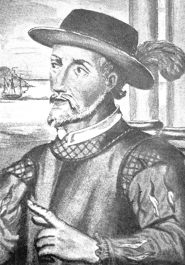
Juan Ponce de Leon formally claimed the land he called "La Florida" for the Spanish Crown on April 8, 1513, planting a cross and reading the Requerimiento, a legal document informing any indigenous peoples present that their lands now belonged to Spain and that resistance would be met with enslavement and war. The ceremony was a legal fiction performed for an audience that could not understand it, in a language they had never heard, asserting sovereignty over a territory the Spanish had not explored and could not yet occupy. Ponce de Leon had first sighted the Florida coast on March 27 and made landfall near present-day St. Augustine on April 2. He named the territory "La Florida" for Pascua Florida, the Spanish Easter celebration, which coincided with his arrival. The expedition then sailed south along the Atlantic coast, rounding the Florida Keys and proceeding up the Gulf coast. Along the way, Ponce de Leon's sailors encountered the Gulf Stream, the powerful Atlantic current that would later become the highway for Spanish treasure fleets returning to Europe. The expedition was not a voyage of exploration in the romantic sense. Ponce de Leon sailed under a royal patent that granted him the right to discover, settle, and govern new territories at his own expense, in exchange for a percentage of any wealth extracted. He was a veteran conquistador who had accompanied Columbus on his second voyage, conquered Puerto Rico, and enriched himself through gold mining and the encomienda system of forced indigenous labor. Florida was a business proposition. The indigenous peoples of Florida were neither passive nor welcoming. The Calusa, who controlled the southwestern coast, were a powerful maritime society with a complex chiefdom, large permanent settlements, and extensive trade networks. When Ponce de Leon returned to Florida in 1521 with 200 colonists and 50 horses to establish a permanent settlement near Charlotte Harbor, Calusa warriors attacked the landing party. Ponce de Leon was struck in the thigh by an arrow. The colonists retreated to Cuba, where the wound became infected and killed him. Spain would not establish a permanent settlement in Florida until Pedro Menendez de Aviles founded St. Augustine in 1565, making it the oldest continuously occupied European city in the United States.
April 8, 1513
513 years ago
Key Figures & Places
What Else Happened on April 8
He didn't die in battle. Caracalla fell to a lone guard named Martialis, who stabbed him near Carrhae while the emperor was answering nature's call. The Praetor…
Siddhartha Gautama sat beneath a Bodhi tree in Bodh Gaya, in what is now northeastern India, and refused to move until he understood the nature of suffering. Ac…
A six-year-old boy named Chilperic died alongside his father in the quiet town of Blaye. King Charibert II and his infant son were cut down, likely by order of …
Abbasid forces crushed Ya'qub ibn al-Layth’s Saffarid army at the Battle of Dayr al-'Aqul, forcing a chaotic retreat down the Tigris. By halting the Saffarid ad…
Walkelin squeezed into a cathedral that still smelled of wet lime and sawdust. He'd spent fifteen years forcing laborers to haul stone from quarries miles away,…
An excommunication that lasted seven years for a man who already said he agreed with the Pope. Roger II of Sicily backed Anacletus II against Innocent II, then …
Talk to History
Have a conversation with historical figures who witnessed this era. Ask questions, explore perspectives, and bring history to life.