President Harrison Dies in Office: America's Shortest Term
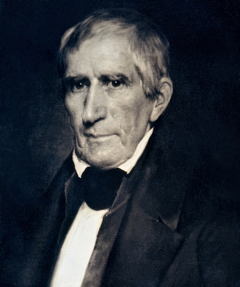
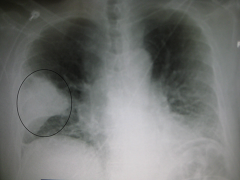
William Henry Harrison delivered the longest inaugural address in American history on March 4, 1841, speaking for one hour and forty minutes in cold, wet weather without a hat or overcoat. The speech, which Daniel Webster had edited down from an even longer draft, was a detailed argument for limited executive power and a subtle rebuke of Andrew Jackson's presidency. Three weeks later, Harrison developed a cold that progressed to pneumonia and pleurisy. He died on April 4, 1841, exactly one month after taking office, becoming the first president to die in the job. Harrison was 68 at his inauguration, the oldest president until Ronald Reagan. He had been elected largely on the strength of his military reputation, particularly his 1811 victory at the Battle of Tippecanoe against Tecumseh's confederacy and his performance commanding American forces in the War of 1812. The Whig Party chose him precisely because he was a war hero with few strong political positions, a blank canvas on which party leaders like Henry Clay could project their agenda. The immediate medical question was straightforward: pneumonia killed him. The political question was anything but. The Constitution stated that upon the president's death, the vice president would assume "the powers and duties of said office," but it did not clearly specify whether the vice president became president or merely acting president. John Tyler, Harrison's vice president, settled the matter by asserting that he was the president in full, not a caretaker. He took the oath of office, moved into the White House, and refused to open mail addressed to "Acting President Tyler." Tyler's precedent, established through sheer force of assertion, governed every subsequent presidential succession until the Twenty-Fifth Amendment codified it in 1967. Had Tyler accepted the "acting president" interpretation, the nature of executive power in America might have developed very differently, with Congress rather than the vice president controlling the transition. Harrison's death also destroyed the Whig Party's agenda, as Tyler promptly vetoed most of the legislation Clay's congressional majority passed, earning the nickname "His Accidency."
April 4, 1841
185 years ago
Key Figures & Places
What Else Happened on April 4
A laurel wreath that smelled of wet earth and crushed olive leaves. Agrippa Menenius Lanatus marched through Rome in 503 BC, not for grand strategy, but because…
A drone spotted a Russian convoy in a ravine just as dawn broke over Chasiv Yar. But the soldiers inside didn't see the trap closing; they only saw the mud and …
Fire roared through Luoyang's palaces, turning marble to dust. Dong Zhuo dragged the emperor east while his men burned every library and temple for weeks. Thous…
King Uneh Chan of Calakmul shattered the defenses of Palenque, launching a devastating assault that crippled the rival city-state’s political stability. This br…
Pulakeshin II didn't just win; he carved his victory into stone across a thousand miles of India's heartland in 619. Two kings stood on opposite banks of the Na…
King Louis the Pious seized Barcelona from the Moors after a grueling months-long siege, securing the Frankish Empire’s southern frontier. This victory establis…
Talk to History
Have a conversation with historical figures who witnessed this era. Ask questions, explore perspectives, and bring history to life.