Okinawa Falls: Pacific's Bloodiest Battle Ends After 82 Days
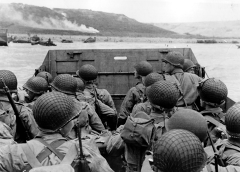
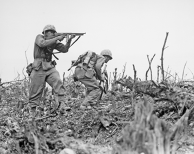
American soldiers and Marines wading ashore on Okinawa on April 1, 1945, expected to die on the beach. Instead, they met almost no resistance. The Japanese had abandoned their coastal defenses to lure the invasion force inland, where a network of caves, tunnels, and fortified ridgelines waited. The 82-day battle that followed became the Pacific War's bloodiest engagement and the final argument for dropping the atomic bomb. Operation Iceberg was the largest amphibious assault in the Pacific theater, landing four Army divisions and two Marine divisions on an island just 340 miles from the Japanese mainland. The strategic purpose was clear: Okinawa would serve as the staging base for Operation Downfall, the planned invasion of Japan itself. Japanese commanders understood this and prepared accordingly, turning the island's southern half into a fortress designed to inflict maximum casualties. The fighting on land was savage. Japanese forces held interconnected positions across the Shuri Line, forcing Americans into weeks of close-quarters combat for individual ridgelines and cave complexes. At sea, Japan unleashed over 1,900 kamikaze attacks, sinking 36 Allied ships and damaging nearly 400 more. The destroyer USS Laffey survived 22 individual kamikaze strikes in a single engagement. Japanese called the bombardment "tetsu no ame," the rain of steel. Americans had their own name: the typhoon of steel. The human toll was staggering. Over 12,500 Americans died. Japanese military casualties exceeded 77,000, with most fighting to the death or committing suicide rather than surrendering. Between 42,000 and 150,000 Okinawan civilians perished, many driven to suicide by Japanese propaganda warning them that Americans would torture and kill them. General Simon Bolivar Buckner, commanding the U.S. Tenth Army, was killed by enemy fire just days before the battle ended, the highest-ranking American officer killed in action during the war. Okinawa's casualty figures convinced American planners that invading the Japanese home islands would cost hundreds of thousands of lives, directly influencing the decision to use atomic weapons on Hiroshima and Nagasaki.
April 1, 1945
81 years ago
Key Figures & Places
What Else Happened on April 1
He handed over half an empire to his friend Maximian, splitting Rome's control between East and West in 286. That wasn't just a new boss; it was a desperate gam…
A four-year-old boy named Sima Yan, later known as Emperor Jin Chengdi, succeeded his father Jin Mingdi as emperor of the Eastern Jin Dynasty on March 5, 325 AD…
Soldiers dragged Majorian from the mud of Placentia and shouted his name until the sun set. He wasn't a senator or a general's son; he was just a common soldier…
Justinian I ascended to co-emperor alongside his uncle, Justin I, securing a transition that consolidated imperial power in Constantinople. This partnership all…
She sat on the throne for exactly one day, wearing her father's crown while her mother, Empress Dowager Hu, pretended the world hadn't just exploded. In 528, Yu…
Three days of looting turned Constantinople's grand streets into a chaotic river of stolen silver and weeping merchants before Alexios I Komnenos finally took h…
Talk to History
Have a conversation with historical figures who witnessed this era. Ask questions, explore perspectives, and bring history to life.