

Treaty of Paris Ends the Crimean War: Russia Humiliated
The diplomats couldn't agree on where to sit. Russia's Count Orlov refused to sign until the seating arrangement acknowledged his nation's dignity—despite the fact that Russia had just lost 500,000 men and the war itself. The Treaty of Paris ended the Crimean War on March 30, 1856, but its real victory wasn't territorial. It banned warships from the Black Sea and declared it neutral waters, a humiliation that gnawed at Russian pride for fifteen years until they simply ignored it. The Ottomans got a seat at the European table for the first time, admitted to the "Concert of Europe." But here's the thing: this war's greatest legacy wasn't diplomatic—it was Florence Nightingale's data visualizations proving that army hygiene killed more soldiers than combat ever did.
March 30, 1856
170 years ago
Key Figures & Places
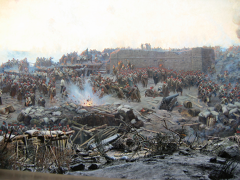
Crimean War
Wikipedia
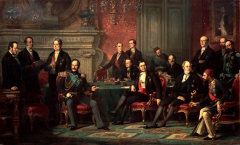
Treaty of Paris (1856)
Wikipedia

Treaty of Paris (1856)
Wikipedia

Crimean War
Wikipedia

Paris
Wikipedia

Black Sea
Wikipedia

Ottoman Empire
Wikipedia

Russia
Wikipedia

Danube
Wikipedia

Russian history
Wikipedia

Second French Empire
Wikipedia

United Kingdom of Great Britain and Ireland
Wikipedia

Kingdom of Sardinia
Wikipedia

England
Wikipedia

France
Wikipedia
What Else Happened on March 30
Chinese astronomers spotted it first—a "broom star" sweeping across their sky in 240 BC. They didn't know they were tracking the same cosmic visitor that would …
Primeiro periélio registrado da passagem do cometa Halley.
The plague did what Byzantine walls couldn't. Bayan I's Avaro-Slavic army surrounded Tomis on the Black Sea coast, ready to crack open another imperial strongho…
saint Ludger fêté les 26 mars est consacré comme premier évêque de Münster.

The church bells rang for evening prayer, and the slaughter began. A French soldier harassed a Sicilian woman outside the Church of the Holy Spirit in Palermo, …
Edward I unleashed his army on Berwick-upon-Tweed, slaughtering thousands of residents and erasing the town’s status as a thriving international trading port. T…
Talk to History
Have a conversation with historical figures who witnessed this era. Ask questions, explore perspectives, and bring history to life.