

Miranda Born: Precursor of Latin American Freedom
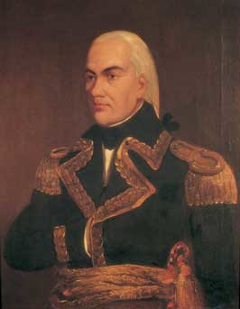
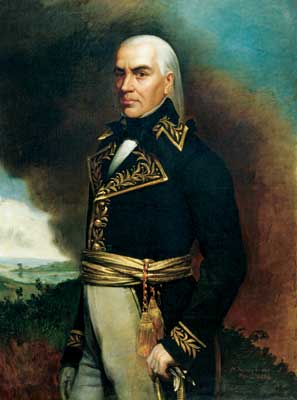
Francisco de Miranda spent three decades on three continents trying to liberate a country he would never see free. Born on March 28, 1750, in Caracas, Venezuela, Miranda was a Creole aristocrat who fought in the American Revolution, advised the leaders of the French Revolution, and personally lobbied Catherine the Great of Russia, the British Parliament, and the fledgling United States government for support to liberate Spanish America. He became known as the "Precursor" of Latin American independence, the man who opened the path that Simon Bolivar would later walk. Miranda served as an officer in the Spanish army before growing disillusioned with colonial rule. He traveled extensively through the United States and Europe in the 1780s, meeting George Washington, Alexander Hamilton, and Thomas Paine. He fought in the French Revolution as a general, commanding troops at the Battle of Valmy and the siege of Antwerp before falling afoul of revolutionary politics and narrowly escaping the guillotine. In 1806, Miranda organized a private expedition to liberate Venezuela, sailing from New York with 200 volunteers. The invasion failed spectacularly: Spanish forces easily repelled the landing, and Miranda spent two years regrouping before returning to Venezuela when revolution finally erupted in 1810. He was declared dictator during the crisis of 1812 but was forced to negotiate a surrender with Spanish royalist forces after a devastating earthquake destroyed Caracas. Simon Bolivar, furious at what he considered Miranda's capitulation, helped hand Miranda over to Spanish authorities. Miranda was imprisoned in Cadiz, Spain, where he died on July 14, 1816, never having achieved the continental liberation he had pursued for 30 years. Bolivar completed the work, but Miranda had drawn the map. His name appears on the national pantheon in Caracas, and his portrait hangs in the palace at Versailles among the heroes of the French Revolution.
March 28, 1750
276 years ago
Key Figures & Places
What Else Happened on March 28
The Roman Senate formally invested Caligula with the full powers of the Principate following the death of Tiberius, consolidating absolute authority in the hand…

The Roman throne went to the highest bidder. After murdering Emperor Pertinax in March 193 AD, the Praetorian Guard, the elite unit theoretically responsible fo…

The Praetorian Guards literally auctioned the Roman Empire to the highest bidder. After murdering Emperor Pertinax in March 193 CE, they stood on their camp wal…
Emperor Valentinian I elevated his brother Valens to co-emperor at Constantinople, formally dividing the Roman Empire into western and eastern halves to address…

Charles the Bald paid 7,000 pounds of silver to make the Vikings go away, and in doing so, he advertised a business model that would terrorize Europe for the ne…

Seven thousand German pilgrims, starving and dying of thirst after three days of Bedouin raids near Caesarea, watched a Muslim army approach across the desert. …
Talk to History
Have a conversation with historical figures who witnessed this era. Ask questions, explore perspectives, and bring history to life.