

British Repelled at Gaza: Ottoman Defense Holds
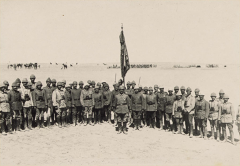
Seventeen thousand Ottoman and German defenders stopped a British advance that should have overwhelmed them. At the First Battle of Gaza on March 26, 1917, British and ANZAC forces under General Sir Charles Dobell attacked the fortified town at the gateway to Palestine, fought their way into the outskirts, and then withdrew at the very moment they were winning. Confused communications and a premature order to retreat turned a near-victory into an embarrassing failure. The British Egyptian Expeditionary Force had been pushing across the Sinai Peninsula since early 1916, building a railway and water pipeline as it advanced. Gaza sat at the coastal end of a defensive line stretching inland to Beersheba, blocking the road to Jerusalem. General Dobell planned a swift assault to take the town before Ottoman reinforcements could arrive, relying on the Desert Mounted Corps to encircle Gaza from the east while infantry attacked from the south. The plan nearly worked. By late afternoon, Australian and New Zealand mounted troops had cut off Gaza from the north and east, and British infantry had penetrated the town's outer defenses. But a thick sea fog had delayed the attack's start by several hours, and as darkness approached, Dobell's chief of staff, Brigadier General Ninnes, ordered a withdrawal, believing the attacking forces were more disorganized than they actually were. Ottoman commander Friedrich Kress von Kressenstein later admitted his garrison was on the verge of surrender when the British pulled back. The failure led to a second assault on Gaza in April that was repulsed even more decisively, costing 6,000 British casualties. It took General Edmund Allenby's flanking attack through Beersheba in October 1917 to finally crack the Gaza-Beersheba line and open the road to Jerusalem. The First Battle of Gaza stands as a case study in how poor communication can snatch defeat from the jaws of victory.
March 26, 1917
109 years ago
Key Figures & Places



What Else Happened on March 26
Emperor Maurice elevated his son Theodosius to the rank of co-emperor, formally securing the Theodosian dynasty’s hold on the Byzantine throne. This calculated …
The first Eid al-Fitr wasn't planned—it emerged from exhaustion. After Muhammad and his followers completed the first mandatory Ramadan fast in 624 CE, they gat…

The body vanished during a donkey ride outside Cairo, but the Fatimid court pretended their caliph was still alive for six weeks. Al-Hakim bi-Amr Allah had terr…
Pope John XIX crowned Conrad II as Holy Roman Emperor in Rome, formalizing the Salian dynasty's grip on power. This coronation solidified the monarch's authorit…
Pope John XIX crowned Conrad II as Holy Roman Emperor in St. Peter's Basilica, solidifying the Salian dynasty's grip on power. This ceremony affirmed the allian…
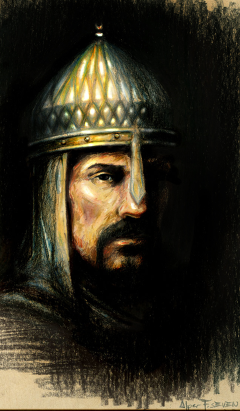
He was supposed to be temporary. When Saladin's uncle Shirkuh died just two months after conquering Egypt, the 31-year-old Kurdish warrior took command of a lan…
Talk to History
Have a conversation with historical figures who witnessed this era. Ask questions, explore perspectives, and bring history to life.