Britain Ends Slave Trade: A Moral Victory
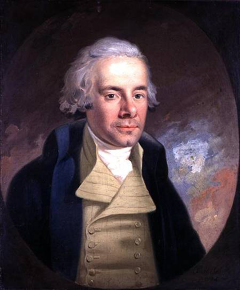
The Slave Trade Act received royal assent on March 25, 1807, abolishing the transatlantic slave trade throughout the British Empire. The law made it illegal for British ships to transport enslaved people and for British subjects to participate in the trade. Violators faced fines of 100 pounds per enslaved person found on board. The law did not abolish slavery itself, which continued in British colonies for another 26 years. The campaign to abolish the slave trade had been building since the 1780s. William Wilberforce, a member of Parliament who had undergone an evangelical conversion, became its parliamentary champion in 1787. He was supported by the Society for Effecting the Abolition of the Slave Trade, founded the same year by Thomas Clarkson and Granville Sharp, which organized one of the first mass petition campaigns in British history. The abolitionists faced enormous opposition. The slave trade was enormously profitable for British merchants, shipowners, sugar planters, and port cities like Liverpool and Bristol. The West India lobby, representing plantation owners, was one of the most powerful interest groups in Parliament. Clarkson traveled over 35,000 miles across Britain collecting evidence: testimonies from sailors, diagrams of slave ships showing the inhuman packing of human beings into holds, and physical artifacts including shackles and branding irons. The famous cross-section diagram of the slave ship Brookes, showing 482 enslaved people packed into a single vessel, became one of the most influential pieces of political propaganda in British history. Wilberforce introduced abolition bills repeatedly from 1789 onward. They were defeated in 1791, 1792, 1793, 1797, 1798, 1799, 1804, and 1805. The bill finally passed in 1807 by a vote of 283 to 16 in the House of Commons. The Royal Navy was tasked with enforcement, establishing the West Africa Squadron to intercept slave ships. Between 1808 and 1860, the squadron captured approximately 1,600 slave ships and freed 150,000 enslaved people. The full abolition of slavery in the British Empire came with the Slavery Abolition Act of 1833.
March 25, 1807
219 years ago
What Else Happened on March 25
Liu Yu didn't just conquer Guanggu — he executed every member of the Southern Yan royal family he could find. The 410 siege was personal: Murong De's dynasty ha…
Refugees fleeing barbarian invasions established Venice at high noon, seeking safety among the shifting mudflats of the Venetian Lagoon. By choosing this isolat…
The refugees hammering wooden pilings into a malarial swamp were not building a temporary shelter. According to tradition, Venice was founded on March 25, 421, …
The pope walked 1,400 miles to meet an emperor who'd been mutilating his predecessors. Constantine became the 88th pope in 708, then did something no pontiff wo…
Pope Constantine ascended to the papacy, inheriting a church deeply embroiled in the Monothelite controversy. His subsequent journey to Constantinople to meet E…
He didn't want to be emperor in the first place. Tax collectors in 715 had dragged Theodosios III from his minor bureaucratic post and forced the purple robes o…
Talk to History
Have a conversation with historical figures who witnessed this era. Ask questions, explore perspectives, and bring history to life.