

Bhagat Singh Hanged: India's Revolutionary Martyrs
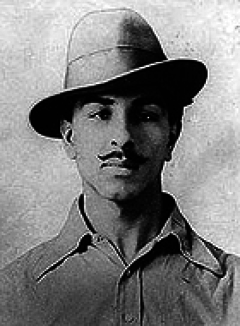
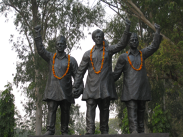
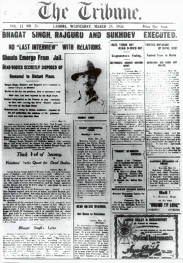
Bhagat Singh walked to the gallows singing. The 23-year-old revolutionary and his comrades Rajguru and Sukhdev were hanged at Lahore Central Jail on March 23, 1931, their executions moved forward by 11 hours to avoid the massive protests that British authorities knew would erupt. Their bodies were secretly cremated on the banks of the Sutlej River, and the ashes were scattered before supporters could recover them. Singh had been sentenced to death for the 1928 killing of British police officer John Saunders, shot in retaliation for the death of nationalist leader Lala Lajpat Rai during a police lathi charge. Singh and his associates had actually intended to kill police superintendent James Scott, who had ordered the charge, but mistook Saunders for their target. Rather than flee, Singh threw himself deeper into revolutionary action, bombing the Central Legislative Assembly in Delhi in 1929 alongside Batukeshwar Dutt to, as he said, "make the deaf hear." Singh used his trial as a political platform. He refused to offer a legal defense, instead reading socialist tracts into the court record and going on a 116-day hunger strike to demand political prisoner status. His courtroom writings on Marxism, atheism, and anti-imperialism circulated widely, making him the most famous revolutionary in India after Gandhi, whose nonviolent methods Singh openly rejected. Mahatma Gandhi was negotiating the Gandhi-Irwin Pact during Singh's imprisonment and declined to make commutation of the death sentences a condition of the agreement. The decision haunted Gandhi's legacy in Punjab, where Singh became a folk hero whose popularity rivals Gandhi's to this day. Singh remains the only figure in Indian independence whose birthday is a state holiday in three different Indian states.
March 23, 1931
95 years ago
Key Figures & Places
What Else Happened on March 23
Muhammad's archers abandoned their posts to collect battlefield spoils, and that single decision cost the Muslims their certain victory at Uhud. The Prophet had…
Jocelin of Melrose ascended to the bishopric of Glasgow, initiating a massive expansion of the city's cathedral and the surrounding settlement. By securing a ro…
Court official Ho Quy Ly deposed the Tran Dynasty after 175 years of rule in 1400, seizing the Vietnamese throne and establishing the short-lived Ho Dynasty. Th…
The last monk to surrender didn't go quietly. Robert Fuller, abbot of Waltham Abbey, held out until March 23, 1540—outlasting 800 other monasteries that Henry V…
The peace treaty lasted exactly six months. Catherine de Medici's advisors knew it wouldn't hold when they signed the Peace of Longjumeau in March 1568—the Hugu…
The peace treaty lasted six months. Catherine de' Medici and her teenage son Charles IX granted French Protestants freedom of conscience and the right to worshi…
Talk to History
Have a conversation with historical figures who witnessed this era. Ask questions, explore perspectives, and bring history to life.