

Joliot-Curie Born: Pioneer of Artificial Radioactivity
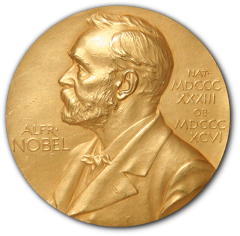
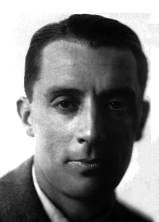
Frederic Joliot-Curie was born in Paris on March 19, 1900, into a world that his future wife's family was already transforming through their work on radioactivity. He married Irene Curie, the daughter of Marie and Pierre Curie, in 1926, and together they made one of the most important discoveries in nuclear physics: that stable elements could be made artificially radioactive. Joliot studied at the Ecole de Physique et de Chimie Industrielles in Paris, where Paul Langevin recognized his talent and recommended him for a position at the Radium Institute directed by Marie Curie. Working under Marie Curie brought the young physicist into contact with Irene, and their partnership became simultaneously personal and scientific. Both adopted the hyphenated surname Joliot-Curie. Their breakthrough came in January 1934. While bombarding aluminum foil with alpha particles from a polonium source, they noticed that the aluminum continued to emit radiation after the alpha source was removed. Analysis revealed that the bombardment had transmuted aluminum into a new, radioactive isotope of phosphorus that did not exist in nature. For the first time, humans had created artificial radioactivity. The discovery earned them the 1935 Nobel Prize in Chemistry, making the Curie family the holders of five Nobel Prizes across two generations. Artificial radioactive isotopes quickly became indispensable tools in medicine, biology, and industry. Radioactive tracers allowed scientists to track chemical reactions in living organisms, diagnose diseases, and study metabolic processes. The production of artificial isotopes also contributed to the theoretical framework that led to nuclear fission. Joliot-Curie was deeply involved in politics. He joined the French Resistance during World War II, served as director of France's Atomic Energy Commission after the war, and was a prominent member of the French Communist Party. His political activities eventually led to his dismissal from the atomic energy post in 1950 during the early Cold War. He died of liver disease in 1958, two years after Irene's death from leukemia caused by radiation exposure.
March 19, 1900
126 years ago
Key Figures & Places
What Else Happened on March 19
Byzantine Emperor Michael VIII Palaiologos and the Venetian Republic secured a two-year truce, stabilizing trade routes across the Mediterranean. By renewing Ve…
The Mongol navy crushed the last Song dynasty resistance at the Battle of Yamen, driving the young emperor and his officials to drown themselves in the sea. Thi…

Yuan admiral Zhang Hongfan lured the desperate Song navy into a fatal trap at Yamen Bay in 1279, ending four centuries of Song Dynasty rule and completing the M…
Edward I didn't conquer Wales with a final battle — he did it with paperwork. The Statute of Rhuddlan transformed centuries of Welsh independence into sixteen c…
The journey nearly killed him before he reached Rome. Frederick III spent sixteen months traveling from Vienna to his coronation, dragging his entire court acro…

Catherine de Medici's thirteen-year-old son Charles IX sat on the throne of France as his mother negotiated the Edict of Amboise, signed on March 19, 1563, endi…
Talk to History
Have a conversation with historical figures who witnessed this era. Ask questions, explore perspectives, and bring history to life.