

Leonov Steps into Space: First Human Spacewalk
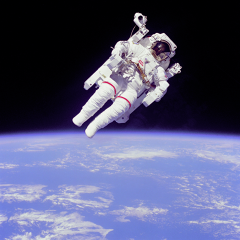
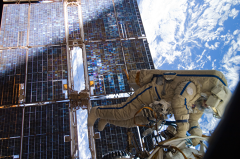
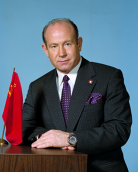
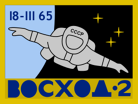
Alexei Leonov squeezed through the airlock hatch of Voskhod 2 on March 18, 1965, pushed himself into the void, and became the first human being to float freely in space. For twelve minutes, connected to the spacecraft by a 5.35-meter tether, he tumbled slowly above the Earth, looking down at a panorama stretching from the Strait of Gibraltar to the Caspian Sea. Then he nearly died trying to get back inside. The mission was the Soviet Union's latest move in the Space Race. NASA was preparing for its Gemini program, which included planned spacewalks, and Soviet leadership wanted to beat the Americans to the milestone. Leonov's spacewalk was rushed into the schedule, with equipment that had been tested but not extensively proven. The Voskhod 2 spacecraft used an inflatable airlock called Volga, an ingenious but fragile fabric tube reinforced by air-filled booms that extended from the spacecraft's hull. Leonov's copilot Pavel Belyayev controlled the airlock from inside while Leonov entered, depressurized, and opened the outer hatch. Two cameras inside the airlock and one on an external boom recorded the historic event. The crisis came when Leonov attempted to reenter the airlock. His spacesuit had ballooned in the vacuum to the point where he could not bend his limbs enough to fit through the hatch. His core body temperature rose dangerously as he struggled. Without informing mission control, Leonov bled air pressure from his suit, reducing it to the minimum survivable level. The suit deflated enough for him to pull himself in headfirst, the opposite of the planned feet-first entry, requiring him to turn around inside the cramped airlock. The problems continued. The spacecraft's automatic reentry system malfunctioned, forcing Belyayev to perform a manual reentry that landed them 386 kilometers off target in a dense Ural forest. The cosmonauts spent two nights in the snow, surrounded by wolves, before rescue teams reached them on skis. Leonov's twelve minutes outside Voskhod 2 proved that humans could work in the vacuum of space, the essential precondition for every subsequent achievement in spaceflight.
March 18, 1965
61 years ago
Key Figures & Places
What Else Happened on March 18

The Roman Senate proclaimed Gaius Julius Caesar Augustus Germanicus emperor on March 18, 37 AD, immediately after the death of Tiberius. The twenty-four-year-ol…
The Roman Senate bypassed the late Emperor Tiberius’s will to install his grand-nephew, Caligula, as the new ruler. This swift transition ended the uncertainty …
His mother tried to bribe the soldiers with gold. It didn't work. Emperor Alexander Severus and Julia Mamaea — who'd ruled Rome through her 26-year-old son for …
Caliph Abu Bakr crushed the final major resistance of the Ridda Wars, consolidating the Arabian Peninsula under a single central authority. This victory transfo…
A massive earthquake shattered the Levant and the Arabian Peninsula, collapsing structures across a vast region and claiming up to 20,000 lives. This disaster d…
Frederick II crowned himself King of Jerusalem inside the Church of the Holy Sepulchre, securing the city through diplomacy rather than the bloodshed typical of…
Talk to History
Have a conversation with historical figures who witnessed this era. Ask questions, explore perspectives, and bring history to life.