

Ivy Mike Detonates: America Tests First Hydrogen Bomb
A fireball three miles wide vaporized the island of Elugelab in the Eniwetok Atoll on November 1, 1952, replacing solid coral with a crater 164 feet deep and over a mile across. The detonation of Ivy Mike, the world's first thermonuclear device, produced a yield of 10.4 megatons, roughly 700 times the power of the bomb that destroyed Hiroshima. The mushroom cloud rose to 135,000 feet and spread 100 miles across the Pacific sky. Ivy Mike was not a deliverable weapon. The device weighed 82 tons and required a building-sized cryogenic facility to keep its liquid deuterium fuel at minus 250 degrees Celsius. Edward Teller, the physicist who had championed thermonuclear research since the Manhattan Project, and mathematician Stanislaw Ulam had solved the key design problem in 1951 with the Teller-Ulam configuration, which used radiation from a fission primary to compress and ignite a separate fusion secondary stage. The test confirmed that there was no theoretical upper limit to the destructive power humans could harness. A fission bomb's yield was constrained by the critical mass of its fuel; a fusion device could simply be made larger. This realization transformed Cold War strategy. Within nine months, the Soviet Union detonated its own thermonuclear device, RDS-6s, beginning a weapons race measured in megatons rather than kilotons. The strategic implications were immediate and existential. Nuclear arsenals grew from dozens of weapons to tens of thousands. The doctrine of mutual assured destruction replaced earlier theories of winnable nuclear war. The fallout from Pacific testing contaminated inhabited islands and exposed Marshall Islanders to dangerous radiation levels, consequences that took decades to fully acknowledge. Elugelab, once a small coral island, simply ceased to exist.
November 1, 1952
74 years ago
Key Figures & Places
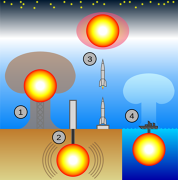
nuclear weapons testing
Wikipedia

Ivy Mike
Wikipedia
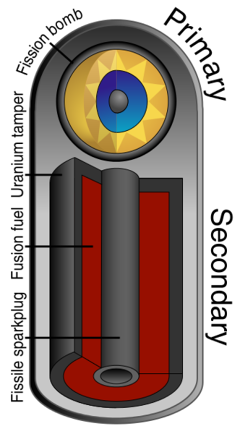
thermonuclear weapon
Wikipedia
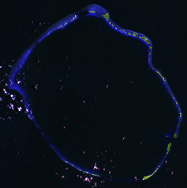
Eniwetok
Wikipedia
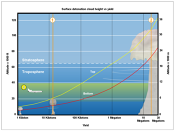
megaton
Wikipedia

Nuclear weapons testing
Wikipedia

Thermonuclear weapon
Wikipedia

Enewetak Atoll
Wikipedia

TNT equivalent
Wikipedia

Pacific Ocean
Wikipedia

Nuclear weapon design
Wikipedia
Fermium
Wikipedia
Einsteinium
Wikipedia
What Else Happened on November 1
Roman Emperor Valentinian I received word that the Alemanni had breached the Rhine frontier, launching a massive raid into Gaul. This breach forced the emperor …
The emperor packed up and personally moved to Paris. Not a general, not a deputy — Valentinian I himself relocated his command to a city most Romans still consi…
A single land deed buried in bureaucratic paperwork accidentally named a nation. Emperor Otto III, just sixteen years old, signed a document granting land right…
Empress Matilda surrendered her claim to the English throne after months of political deadlock, allowing Stephen of Blois to reclaim his title as King. This col…
Fifteen-year-old Philip II ascended the French throne, inheriting a kingdom largely confined to the royal domain around Paris. By centralizing administrative po…
The Seljuq Turks seized the strategic port of Sinope, securing their first direct access to the Black Sea. This conquest transformed the Sultanate of Rum into a…
Talk to History
Have a conversation with historical figures who witnessed this era. Ask questions, explore perspectives, and bring history to life.