Evans Unearths Knossos: Minoan Civilization Revealed
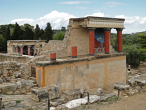
Sir Arthur Evans purchased the hill of Kephala overlooking the Kairatos River in Crete on March 16, 1900, and within weeks began uncovering what turned out to be the largest Bronze Age palace complex in the Mediterranean. The excavation at Knossos revealed an entire civilization that predated classical Greece by over a thousand years, a civilization Evans named Minoan, after the mythological King Minos. Evans, the keeper of the Ashmolean Museum at Oxford, had traveled to Crete pursuing ancient seal stones carved with an unknown script. He suspected the stones originated from a major settlement and began purchasing land at Knossos, where earlier investigators had found scattered artifacts. When systematic excavation began in March 1900, the scale of what lay beneath the surface exceeded every expectation. The palace complex covered roughly 150,000 square feet, with over 1,300 rooms arranged around a central courtyard. The multi-story structure featured advanced drainage systems, light wells that illuminated interior rooms, and walls decorated with vivid frescoes depicting bull-leaping, dolphins, priestesses, and processional scenes. Storage magazines held enormous ceramic jars, called pithoi, capable of holding grain, oil, and wine in quantities that demonstrated a sophisticated redistributive economy. Evans identified two writing systems at Knossos. Linear A, the earlier script, remains undeciphered. Linear B was eventually decoded by Michael Ventris in 1952 as an early form of Greek, revolutionizing understanding of the relationship between Minoan and Mycenaean civilizations. Evans's reconstruction of the palace proved controversial. He rebuilt portions of the structure using reinforced concrete, interpreting and sometimes inventing details that archaeological evidence did not fully support. Modern scholars debate whether Knossos was a palace, a temple, or some combination of both. The excavation at Knossos pushed European civilization's origin story back by a millennium and proved that the Aegean world had produced a literate, urbanized society centuries before Homer composed the Iliad.
March 16, 1900
126 years ago
Key Figures & Places

What Else Happened on March 16
Nebuchadnezzar didn't destroy Jerusalem the first time — he just walked in and took what he wanted. After a three-month siege in 597 BC, the young King Jehoiach…
Nebuchadnezzar II seized Jerusalem and deposed King Jehoiachin, installing Zedekiah as a puppet ruler to secure Babylonian control over the Levant. This forced …
Caligula ascended to the Roman throne following the death of Tiberius, ending a period of paranoid isolation in the imperial court. His initial popularity quick…
Two Hunnic bodyguards walked right up to the emperor during archery practice and killed him with their swords. Optila and Thraustila weren't acting on orders—th…
He'd been governor for just five years when Meng Zhixiang bet everything on a crown. The military commander watched Later Tang collapse into chaos and saw his o…
The Jews of York knew the royal castle was a trap, but the mob outside was worse. 150 men, women, and children barricaded themselves inside Clifford's Tower on …
Talk to History
Have a conversation with historical figures who witnessed this era. Ask questions, explore perspectives, and bring history to life.