

Henry I Defeats Hungarians: German Power Rises
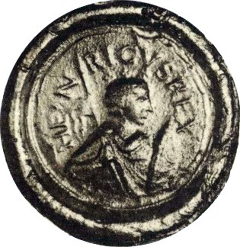
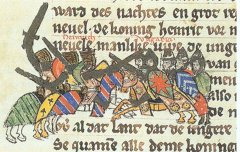
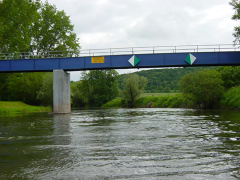
German King Henry I defeated a Hungarian raiding army at the Battle of Riade in March 933, ending decades of devastating Magyar incursions that had terrorized central Europe and establishing the German kingdom as the dominant military power between the Rhine and the Elbe. The victory came at the end of a calculated ten-year truce during which Henry had systematically rebuilt Germany's defenses. The Magyars had been raiding deep into European territory since the late ninth century, exploiting the fragmentation of the Carolingian Empire. Their light cavalry tactics, based on rapid mounted archery and strategic withdrawal, made them nearly impossible to defeat using the heavy infantry formations that Frankish armies relied upon. They raided as far west as the Pyrenees and as far south as Italy, extracting tribute from kingdoms too weak to resist. Henry, who became King of East Francia (Germany) in 919, recognized that defeating the Magyars required time and preparation. After a Magyar force defeated his army and captured one of his nobles in 924, Henry negotiated a nine-year truce, agreeing to pay annual tribute in exchange for peace. He used the breathing space to construct a network of fortified towns across Saxony and Thuringia, building walls and towers that could shelter the rural population during raids and serve as bases for counterattack. Henry also reformed his military forces, training heavy cavalry that could match the Magyars in mounted combat rather than relying solely on infantry. When the truce expired in 933, Henry refused to resume tribute payments, reportedly sending the Magyars a mangy dog instead of the customary gold. The Magyars launched a punitive raid into Thuringia, where Henry's reorganized army met them near the Unstrut River. The details of the battle are sparse in surviving sources, but the outcome was decisive. The Magyar force was routed, and the raids into Saxony and Thuringia ceased. Henry's son Otto I would deliver the final blow at the Battle of Lechfeld in 955, ending the Magyar threat permanently. Henry I proved that the cost of preparation was always cheaper than the cost of defeat.
March 15, 933
1093 years ago
Key Figures & Places




What Else Happened on March 15
He walked into Rome on foot instead of riding a chariot — and the crowd knew exactly what that meant. Aulus Manlius Vulso's ovation for ending the war with Veii…

Twenty-three stab wounds. The most powerful man in the Roman Republic bled out at the base of Pompey's statue on the Ides of March, 44 BC, killed by men he had …

The conspirators cornered Julius Caesar in the portico of Pompey's Theatre on March 15, 44 BC, with Tillius Cimber presenting a petition as the signal to attack…
He was selling straw sandals when the empire fell apart. Liu Bei's bloodline connected him to the Han emperors, but through a prince from 150 years earlier—dist…
Sun Hao of Eastern Wu surrendered to the Jin emperor Sima Yan, ending the Three Kingdoms period that had fractured China for decades. This capitulation unified …
He'd already killed most of his family. But Constantius II was desperate — Persian armies threatened the eastern frontier while he fought usurpers in the West, …
Talk to History
Have a conversation with historical figures who witnessed this era. Ask questions, explore perspectives, and bring history to life.