

Holy Roman Empire Dissolved: Francis II Abdicates
Voltaire had mocked it as "neither holy, nor Roman, nor an empire," and on August 6, 1806, Francis II proved the philosopher right by dissolving it with a stroke of his pen. The Holy Roman Empire, a sprawling confederation of German-speaking states that had endured in various forms for over 800 years since Charlemagne's coronation, simply ceased to exist. Francis abdicated the imperial title and released all member states from their obligations, an act not of defeat in battle but of surrender to political reality. Napoleon Bonaparte had made the empire's dissolution inevitable. His crushing victory at Austerlitz in December 1805 humiliated the Austrian and Russian armies and demonstrated that France dominated central Europe. In July 1806, Napoleon organized sixteen German states into the Confederation of the Rhine, a French satellite alliance that formally withdrew from the Holy Roman Empire. With most of the empire's constituent members now pledged to France, the institution Francis nominally led was an empty shell. Napoleon delivered an ultimatum: dissolve the empire or face consequences. Francis complied, but he was not left without a throne. He had anticipated this moment two years earlier by declaring himself Emperor of Austria in 1804, creating a separate imperial title that was entirely under his control. The Habsburg dynasty that had held the Holy Roman Imperial crown almost continuously since 1438 simply shifted its legitimacy to a different entity. The dissolution had consequences far beyond one dynasty's title change. The patchwork of hundreds of small German states, free cities, and ecclesiastical territories began consolidating into larger units, a process that would accelerate through the 19th century and eventually produce German unification under Prussia in 1871. The medieval political order of central Europe, in which authority was fragmented and overlapping, gave way to the modern system of sovereign nation-states. An empire that had survived the Reformation, the Thirty Years' War, and two centuries of decline could not survive Napoleon.
August 6, 1806
220 years ago
Key Figures & Places
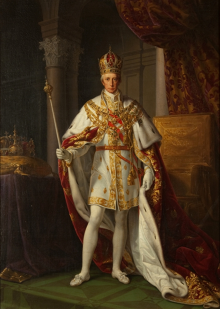
Francis II, Holy Roman Emperor
Wikipedia

dissolved
Wikipedia

Austrian Empire
Wikipedia

Francis II, Holy Roman Emperor
Wikipedia

Austrian Empire
Wikipedia

Holy Roman Empire
Wikipedia

Napoleon
Wikipedia

Russia
Wikipedia

Turkey
Wikipedia

Unification of Italy
Wikipedia

Kingdom of Sardinia
Wikipedia

Reino lombardo-véneto
Wikipedia

Emperor
Wikipedia

Liste des souverains du Saint-Empire
Wikipedia

Holy Roman Emperor
Wikipedia
What Else Happened on August 6
Ibrahim ibn al-Ashtar's pro-Alid forces crushed the Umayyad army at the Battle of Khazir in 686, killing the commander Ubayd Allah ibn Ziyad and shattering Umay…
Genoese galleys crushed the Pisan fleet off the Meloria shoals, capturing thousands of sailors and sinking the pride of the Pisan navy. This decisive naval coll…
Lithuanian forces crushed the Crimean Khanate’s raiding army at the Battle of Kletsk, halting a massive incursion into the Grand Duchy’s southern territories. T…
Gonzalo Jiménez de Quesada established Bogotá on the high Andean plateau, securing a permanent Spanish foothold in the interior of modern-day Colombia. This set…
Toyotomi Hideyoshi was appointed kampaku — Imperial Regent — in 1585, formalizing his status as the de facto ruler of Japan after he had already unified most of…
Portugal and the Dutch Republic signed the Treaty of The Hague, ending decades of colonial conflict over Brazil and Africa. By ceding New Holland to the Portugu…
Talk to History
Have a conversation with historical figures who witnessed this era. Ask questions, explore perspectives, and bring history to life.