Gandhi Leads Salt March: Nonviolence Challenges British Rule
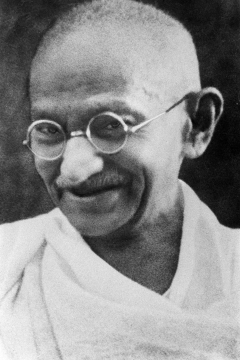
Seventy-eight men walked out of the Sabarmati Ashram behind a sixty-year-old man in a loincloth, heading for the Arabian Sea 240 miles away. By the time Mahatma Gandhi reached the coastal village of Dandi twenty-four days later, on April 5, 1930, the procession had swelled to tens of thousands, and the British Empire faced the most effective act of civil disobedience in modern history. Gandhi chose salt as his target with surgical precision. The British salt tax affected every Indian, rich and poor, Hindu and Muslim. Making or collecting salt without paying the government levy was a criminal offense. The simplicity of the injustice made it impossible to justify and easy to understand, giving Gandhi exactly the symbolic issue he needed to unite a fractious independence movement. The march began on March 12, 1930. Gandhi and his followers walked roughly 12 miles per day, stopping in villages along the route where he spoke to crowds that grew larger at each stop. He gave interviews to foreign journalists who broadcast the spectacle worldwide. The New York Times ran near-daily coverage. At Surat, 30,000 people lined the road. By the time the marchers reached the coast, over 50,000 had gathered. Gandhi walked to the shoreline at Dandi on April 6, picked up a handful of natural salt from the mud flats, and declared the British salt laws broken. The gesture sparked a wave of civil disobedience across India. Millions of Indians began making their own salt. British authorities arrested over 60,000 people in the following weeks, including Gandhi himself on May 5. The brutality of the crackdown, particularly the beating of nonviolent protesters at the Dharasana salt works, generated international outrage. The Salt March did not win Indian independence immediately, but it demolished the moral authority of British rule. Seventeen years later, India was free.
March 12, 1930
96 years ago
Key Figures & Places
What Else Happened on March 12
Belisarius held Rome with just 5,000 men against an Ostrogothic army of 150,000. For over a year, Vitiges surrounded the city, cutting aqueducts and starving th…
The French monk elected pope in 1088 couldn't even enter Rome for a year — his rival already occupied the papal throne. Odo of Châtillon, who took the name Urba…
Holy Roman Emperor Friedrich I officially recognized Munich in the Augsburg arbitration, granting the settlement legal standing as a site for trade and tolls. T…
Konrad von Wallenrode assumed leadership of the Teutonic Order, inheriting a state embroiled in constant border skirmishes with the Grand Duchy of Lithuania. Hi…
Several hundred Spanish soldiers and their indigenous allies defeated a Mapuche army vastly outnumbering them at the Battle of Penco on March 12, 1550, securing…
The Spanish commander gave the city one chance to surrender before the siege. Maastricht refused. What followed was four months of hell — Alexander Farnese's 20…
Talk to History
Have a conversation with historical figures who witnessed this era. Ask questions, explore perspectives, and bring history to life.