

Douglass Asks: What Is the Fourth to a Slave?
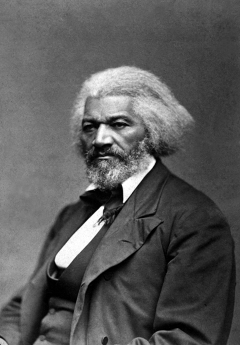
Frederick Douglass stood before the Rochester Ladies Anti-Slavery Society on July 5, 1852, and delivered a question that still resonates: "What, to the American slave, is your Fourth of July?" The date was deliberate. Douglass refused to speak on July 4 itself, choosing instead the day after, because the celebration of American liberty was, to four million enslaved people, a bitter mockery. Douglass was 34 years old and the most famous Black man in America. He had escaped slavery in Maryland fourteen years earlier, taught himself to read and write, and become the abolitionist movement s most powerful orator. His autobiography, published in 1845, provided such detailed descriptions of his enslavement that he was forced to flee to Britain for two years to avoid recapture. British supporters purchased his freedom for 150 pounds sterling. The Rochester speech began with generous praise of the Founding Fathers and the Declaration of Independence, acknowledging their courage and the nobility of their ideals. Then Douglass pivoted. He reminded his audience that the Fourth of July revealed to the enslaved person "the gross injustice and cruelty to which he is the constant victim." The nation s birthday celebrations were "mere bombast, fraud, deception, impiety, and hypocrisy — a thin veil to cover up crimes which would disgrace a nation of savages." The speech ran over an hour and contained some of the most blistering rhetorical passages in American oratory. Douglass systematically demolished every argument used to justify slavery — biblical, constitutional, economic, and racial — with logic, evidence, and controlled fury. He challenged his white audience directly, refusing to soften his message for their comfort. Douglass concluded on an unexpected note of optimism, citing the Constitution s anti-slavery principles and the inevitability of moral progress. He believed American ideals would eventually triumph over American practice. The speech was printed and distributed widely, becoming one of the most important documents of the abolitionist movement and a permanent challenge to any celebration of American freedom that ignores its exclusions.
July 5, 1852
174 years ago
Key Figures & Places


What Else Happened on July 5
Theophilus Patricius engineered a bridge across the Danube's 1,400-meter width using twenty stone piers sunk into one of Europe's fastest currents. The architec…
King John Balliol and Philip IV of France formalized the Auld Alliance, committing both nations to military support against Edward I of England. This mutual def…
Louis of Burgundy and Ferdinand of Majorca clashed at the Battle of Manolada, fighting for control of the Principality of Achaea. Ferdinand died in the skirmish…
Pope Gregory XIII gave the Maronites their own college in Rome, but he died before signing the papers. His successor, Sixtus V, finished the job in 1584. The sc…
Pedro Lopes de Sousa marched 20,000 Portuguese and Lascarin troops into Kandy's interior in October 1594, convinced the mountain kingdom would fall within days.…
John Guy departed Bristol with 39 colonists to establish the first permanent English settlement in Newfoundland at Cupids. This expedition transitioned England’…
Talk to History
Have a conversation with historical figures who witnessed this era. Ask questions, explore perspectives, and bring history to life.