

Madrid Train Bombings Kill 191: Spain's Deadliest Attack
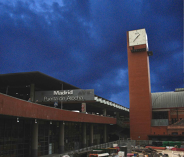
Ten bombs detonated in the span of three minutes across four commuter trains on Madrid's Cercanias rail network during the morning rush hour on March 11, 2004, killing 193 people and wounding approximately 2,000. The coordinated attack, carried out by an al-Qaeda-inspired jihadist cell, remains the deadliest terrorist assault in Spanish history and the worst in Europe since the 1988 Lockerbie bombing. The devices were concealed in backpacks and sports bags left aboard trains traveling from Alcala de Henares toward Madrid's Atocha station. Three bombs exploded on one train near the Atocha station at 7:37 AM, four more on a second train pulling into Atocha, one on a third train at the El Pozo del Tio Raimundo station, and two on a fourth train at Santa Eugenia station. A thirteenth device failed to detonate and was later recovered by police, providing crucial forensic evidence. Spain's conservative government under Prime Minister Jose Maria Aznar immediately blamed ETA, the Basque separatist group, despite early evidence pointing toward Islamist militants. The government's insistence on the ETA narrative in the three days before Spain's general election was widely perceived as politically motivated. Aznar's Popular Party had supported the U.S. invasion of Iraq, and an Islamist attack would have undermined the government's claim that the war posed no additional risk to Spanish citizens. Voters punished the deception. Jose Luis Rodriguez Zapatero's Socialist Party won the March 14 election in an upset, and Zapatero fulfilled his campaign promise by withdrawing Spanish troops from Iraq. The bombing thus became one of the rare terrorist attacks to directly alter the political trajectory of a Western democracy. The attack exposed critical gaps in European counterterrorism cooperation and accelerated information-sharing reforms between EU intelligence agencies that had been stalled for years.
March 11, 2004
22 years ago
Key Figures & Places
Spain
Wikipedia
Madrid
Wikipedia
Madrid Train Bombings
Wikipedia
Madrid train bombings
Wikipedia

2004 Madrid train bombings
Wikipedia

Madrid
Wikipedia

Estación de Atocha-Cercanías
Wikipedia

Estación de El Pozo
Wikipedia

Estación de Santa Eugenia
Wikipedia

Spain
Wikipedia

Provincia de Almería
Wikipedia

Cajalmería
Wikipedia

Unicaja
Wikipedia

1991
Wikipedia

Comisión Europea
Wikipedia

Place du Trocadéro-et-du-11-Novembre
Wikipedia

16e arrondissement de Paris
Wikipedia

Juan Carlos I
Wikipedia

Queen Sofía of Spain
Wikipedia

Wald der Erinnerung (Madrid)
Wikipedia

Parque del Retiro de Madrid
Wikipedia
Parlamentswahl in Spanien 2004
Wikipedia

People's Party (Spain)
Wikipedia

José María Aznar
Wikipedia
Al-Qaeda
Wikipedia
صحيفة القدس العربي
Wikipedia
What Else Happened on March 11
The Praetorian Guard didn't just kill the eighteen-year-old emperor—they erased him. After stabbing Elagabalus and his mother Julia Soaemias in a palace latrine…
She'd been ruling for a child emperor — her three-year-old son Michael III — when Theodora risked everything to reverse a policy that had torn the Byzantine Emp…
The Pope refused to create the archbishopric for seven years because he didn't trust King John of Bohemia's loyalty. Charles IV, John's son, had to wait until h…
John Hawkwood’s tactical brilliance dismantled the Veronese army at the Battle of Castagnaro, securing a decisive victory for Padua. By utilizing flooded fields…
English mercenary captain Sir John Hawkwood deployed a feigned retreat to draw Verona's forces into a devastating ambush at Castagnaro, delivering Padua a decis…
The Jesuits armed thousands of Indigenous converts with European muskets and cavalry tactics, then watched them outmaneuver Portuguese slave raiders at their ow…
Talk to History
Have a conversation with historical figures who witnessed this era. Ask questions, explore perspectives, and bring history to life.