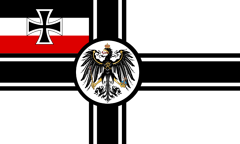
Germany Doubles Navy: The Anglo-German Arms Race Ignites
The German Reichstag passed the Second Naval Law on June 14, 1900, authorizing the construction of a fleet that would double the Imperial German Navy from nineteen to thirty-eight battleships over the next seventeen years. Admiral Alfred von Tirpitz, the architect of the legislation, designed the buildup to create a fleet powerful enough that even the Royal Navy would hesitate to engage it. The law triggered an Anglo-German naval arms race that poisoned relations between the two countries and contributed directly to the alliance system that produced World War I. Tirpitz's "risk theory" calculated that Germany did not need to match Britain ship for ship. Britain maintained naval commitments across a global empire, from the Mediterranean to the Pacific. A concentrated German fleet in the North Sea could threaten enough British capital ships to make war unacceptably costly. The theory assumed Britain would seek an accommodation rather than risk losing naval supremacy, even temporarily. Tirpitz proved spectacularly wrong. Britain responded to the German naval buildup not with conciliation but with acceleration. The launch of HMS Dreadnought in 1906, a revolutionary all-big-gun battleship that rendered every existing capital ship obsolete, reset the arms race at zero and actually favored Britain's superior shipbuilding capacity. Both nations poured enormous resources into dreadnought construction. By 1914, Britain had twenty-nine dreadnoughts and battlecruisers to Germany's seventeen. The naval rivalry also pushed Britain into diplomatic alignments that would have seemed impossible a decade earlier. The Entente Cordiale with France in 1904 and the Anglo-Russian Convention of 1907 reflected Britain's growing concern about German intentions. Kaiser Wilhelm II, who had championed the naval program partly out of personal rivalry with his cousin King Edward VII, ended up achieving the opposite of Tirpitz's strategic goal: encirclement rather than respect.
June 14, 1900
126 years ago
Key Figures & Places
What Else Happened on June 14
Henry the Lion established Munich by destroying a rival bridge to force merchant traffic through his own toll-paying settlement on the Isar. This calculated mov…
Half of England belonged to a French prince, and almost nobody stopped him. Louis of France crossed the Channel in 1216 at the invitation of English barons furi…
The Song Dynasty crowned a seven-year-old emperor in a city they were already fleeing. Zhao Shi became Emperor Duanzong not in a palace but in exile, Fuzhou ser…
Kublai Khan's navy never saw it coming. Prince Trần Quang Khải didn't wait for the Mongols to land — he hit them on the water at Chương Dương, where the fleet w…
Nayan thought the old blood still meant something. As a direct descendant of Genghis Khan's brothers, he commanded 60,000 warriors and believed Mongol tradition…
A fourteen-year-old boy rode out to meet an army. Richard II, barely a king, faced thousands of furious peasants at Blackheath while his advisors hid behind Tow…
Talk to History
Have a conversation with historical figures who witnessed this era. Ask questions, explore perspectives, and bring history to life.