

Uranus Rings Discovered: Solar System's Complexity Revealed
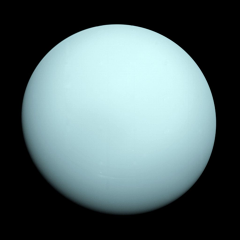
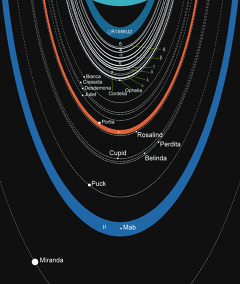
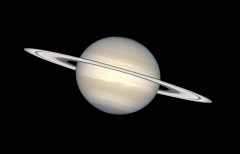
Astronomers James Elliot, Edward Dunham, and Douglas Mink discovered the rings of Uranus on March 10, 1977, and they were not looking for rings at all. The team had set up instruments aboard the Kuiper Airborne Observatory, a modified C-141 cargo plane flying at 41,000 feet over the Indian Ocean, to observe Uranus pass in front of a distant star. The star's light was supposed to reveal details about the planet's atmosphere. Instead, it flickered and dimmed five times before and after the occultation, revealing a system of narrow rings that no telescope had detected. The technique was stellar occultation: when a planet passes in front of a star as seen from Earth, the star's light is affected by the planet's atmosphere and any surrounding material. Elliot, an MIT astronomer, had arranged the observation to study Uranus's upper atmosphere by measuring how it absorbed and refracted the star's light during ingress and egress. The unexpected dimming events occurred at precise, symmetric intervals on both sides of the planet, meaning something was blocking the starlight at specific distances from Uranus. Five distinct dips appeared on the photometric recordings. The symmetry was critical: the same features appeared in the same order before and after the occultation, confirming they were rings orbiting the planet rather than random debris. The initial discovery identified five rings, designated Alpha, Beta, Gamma, Delta, and Epsilon. Subsequent observations from ground-based telescopes and the Kuiper Observatory raised the count to nine by 1978. Voyager 2's flyby in January 1986 confirmed the ring system and discovered two additional rings, bringing the total to eleven. Later Hubble Space Telescope observations found two more outer rings in 2003 and 2005. The rings of Uranus are dramatically different from Saturn's famous bright bands. They are narrow, dark, and composed primarily of particles ranging from centimeters to meters in diameter, with very little of the fine dust that makes Saturn's rings so reflective. The Epsilon ring, the outermost and most prominent, is only 20 to 100 kilometers wide. The discovery of Uranian rings was the first confirmation that ring systems are not unique to Saturn, and it prompted a search that soon revealed rings around Jupiter (1979) and Neptune (1989). Ring systems, it turned out, are common features of giant planets.
March 10, 1977
49 years ago
Key Figures & Places

What Else Happened on March 10

Rome's treasury was empty, its citizens were exhausted, and the First Punic War had dragged on for 23 years when a group of wealthy Romans did something extraor…
Maximian rode into Carthage celebrating victory over the Berbers, but he'd actually spent five years struggling to control tribes who knew every mountain pass a…
Liu Zhiyuan waited just sixteen days after the Khitan invaders abandoned Kaifeng before declaring himself emperor and founding the Later Han dynasty. The former…
Christopher Columbus sailed for Spain, leaving his brother Bartholomew to govern the fledgling settlement of Santo Domingo. This departure solidified the first …
The bishop ran out of wind. Fray Tomás de Berlanga was sailing from Panama to Peru in 1535 when his ship hit the doldrums — dead calm for six days straight. Oce…
The pretender won because his enemy's spiritual leader insisted on joining the battlefield. Abuna Petros II, patriarch of the Ethiopian Orthodox Church, rode al…
Talk to History
Have a conversation with historical figures who witnessed this era. Ask questions, explore perspectives, and bring history to life.