

King Assassinated: Civil Rights Movement Galvanized by Tragedy
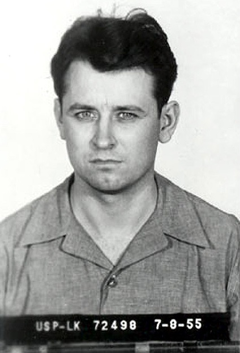
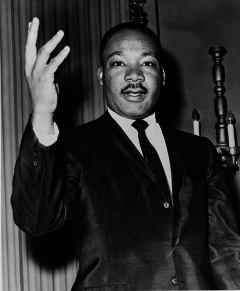
James Earl Ray pleaded guilty to the assassination of Martin Luther King Jr. on March 10, 1969, his 41st birthday, in a Memphis courtroom. The plea avoided a trial, secured a 99-year sentence, and ended the case so quickly that it generated decades of conspiracy theories. Ray began trying to retract his guilty plea three days later and spent the remaining 29 years of his life claiming he was a patsy. King had been shot on April 4, 1968, while standing on the second-floor balcony of the Lorraine Motel in Memphis, where he had traveled to support striking sanitation workers. A single bullet from a Remington Model 760 rifle struck him in the jaw and severed his spinal cord. He was pronounced dead at St. Joseph's Hospital at 7:05 PM. He was 39 years old. Witnesses saw a man fleeing from a rooming house at 422.5 South Main Street, directly across from the Lorraine Motel. Police found a bundle near the rooming house containing the rifle, a pair of binoculars, clothing, and personal items. Fingerprints matched those of James Earl Ray, a Missouri-born career criminal who had escaped from the state penitentiary in Jefferson City in April 1967. Ray had been serving a 20-year sentence for armed robbery. The manhunt lasted 65 days. Ray fled Memphis to Atlanta, drove to Canada, obtained a false passport, flew to London, and was captured at Heathrow Airport on June 8, 1968, while attempting to board a flight to Brussels. British customs agents noticed his passport name appeared on a Royal Canadian Mounted Police watch list. Ray's guilty plea, negotiated by his attorney Percy Foreman, avoided the death penalty. The proceedings lasted two hours. Judge W. Preston Battle accepted the plea, sentenced Ray to 99 years, and the case was closed. Ray immediately regretted the deal. He fired Foreman, hired new lawyers, and spent decades seeking a trial. He claimed a mysterious figure named "Raoul" had directed his movements and that he was framed. The House Select Committee on Assassinations investigated in 1978 and concluded King was likely killed as the result of a conspiracy but could not identify co-conspirators. A 1999 civil trial brought by the King family found that government agencies had participated in the assassination, though the US Department of Justice later concluded the evidence did not support this verdict. Ray died in prison on April 23, 1998. King's assassination and its unresolved questions remain among the most contested events in American history.
March 10, 1969
57 years ago
Key Figures & Places

What Else Happened on March 10

Rome's treasury was empty, its citizens were exhausted, and the First Punic War had dragged on for 23 years when a group of wealthy Romans did something extraor…
Maximian rode into Carthage celebrating victory over the Berbers, but he'd actually spent five years struggling to control tribes who knew every mountain pass a…
Liu Zhiyuan waited just sixteen days after the Khitan invaders abandoned Kaifeng before declaring himself emperor and founding the Later Han dynasty. The former…
Christopher Columbus sailed for Spain, leaving his brother Bartholomew to govern the fledgling settlement of Santo Domingo. This departure solidified the first …
The bishop ran out of wind. Fray Tomás de Berlanga was sailing from Panama to Peru in 1535 when his ship hit the doldrums — dead calm for six days straight. Oce…
The pretender won because his enemy's spiritual leader insisted on joining the battlefield. Abuna Petros II, patriarch of the Ethiopian Orthodox Church, rode al…
Talk to History
Have a conversation with historical figures who witnessed this era. Ask questions, explore perspectives, and bring history to life.