
Pol Pot's Terror Ends: Vietnamese Take Phnom Penh
Vietnamese forces crossed the Cambodian border on December 25, 1978, and reached Phnom Penh in just fourteen days, toppling a regime that had murdered roughly two million of its own citizens. When soldiers entered the capital on January 7, 1979, they found a country of walking skeletons. The Khmer Rouge, under Pol Pot''s leadership, had emptied Cambodia''s cities at gunpoint in April 1975, marching the entire urban population into the countryside at the start of what the regime called Year Zero. The scale of the atrocity defied comprehension. The Khmer Rouge abolished money, closed schools, emptied hospitals, and banned religious practice. Anyone with an education was suspect. Wearing glasses could get you killed, as it suggested literacy. Speaking a foreign language was a death sentence. Former soldiers, civil servants, teachers, monks, and ethnic minorities were systematically executed at sites across the country. Tuol Sleng, a former high school converted into a torture prison, processed roughly 17,000 detainees. Fewer than a dozen survived. Those who were not murdered outright died of starvation, disease, and exhaustion in forced agricultural labor camps. Vietnam''s invasion was not driven by humanitarian concern. Repeated Khmer Rouge border incursions into Vietnamese territory, combined with the massacre of ethnic Vietnamese in Cambodia, provoked the attack. China backed the Khmer Rouge. The Soviet Union backed Vietnam. The fall of Phnom Penh was a proxy conflict within the broader Sino-Soviet split as much as it was a liberation. The international response was perverse. The United States, China, and much of the Western bloc condemned the Vietnamese invasion as a violation of Cambodian sovereignty. Cambodia''s seat at the United Nations remained with the Khmer Rouge for over a decade after they had been driven from power. The regime that had orchestrated one of the twentieth century''s worst genocides retained diplomatic legitimacy while the country that stopped the killing was treated as the aggressor. The contradiction remains one of Cold War diplomacy''s most shameful episodes.
January 7, 1979
47 years ago
Key Figures & Places
Vietnam
Wikipedia
Khmer Rouge
Wikipedia
Cambodian-Vietnamese War
Wikipedia
Phnom Penh
Wikipedia
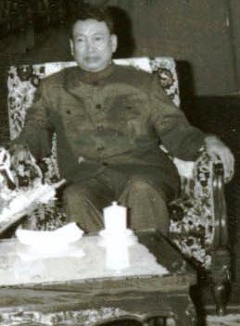
Pol Pot
Wikipedia
Sino-Vietnamese War
Wikipedia
Cambodian–Vietnamese War
Wikipedia
Phnom Penh
Wikipedia
Vietnamese
Wikipedia
Pol Pot
Wikipedia
Khmer Rouge
Wikipedia
People's Army of Vietnam
Wikipedia
Geschichte Kambodschas
Wikipedia
Guerra cambojana-vietnamita
Wikipedia
Cambodia
Wikipedia
What Else Happened on January 7
Caesar heard the Senate's ultimatum and grinned. Twelve years of political maneuvering had led to this moment. The tribunes Mark Antony and Quintus Cassius race…
The Byzantine palace looked more like a street brawl. Nikephoritzes, the tax collector everyone despised, was about to learn how much people hated him. Crowds s…
Alfonso IV became King of Portugal on January 7, 1325, succeeding his father Dinis I. His reign lasted 32 years, during which he transformed Portugal from a sma…
French forces under the Duke of Guise seized Calais, ending over two centuries of English rule on the continent. This swift victory stripped England of its fina…
He wasn't born royal. Boris Godunov clawed his way from court advisor to absolute monarch through a web of cunning and calculated moves. And when Tsar Feodor I …
The entire settlement went up like kindling. Just nine years after its founding, Jamestown—the first permanent English colony in North America—burned to the gro…
Talk to History
Have a conversation with historical figures who witnessed this era. Ask questions, explore perspectives, and bring history to life.