Truman Unveils H-Bomb: Cold War Escalates
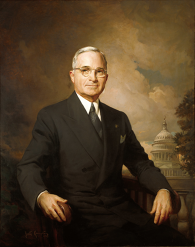
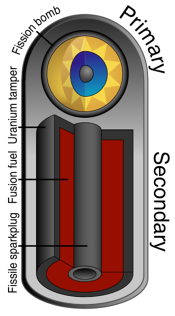
President Harry Truman''s announcement on January 7, 1953, that the United States had developed a hydrogen bomb landed like a thunderclap across the Cold War landscape. The device tested at Eniwetok Atoll on November 1, 1952, code-named Ivy Mike, had yielded 10.4 megatons, roughly 700 times more powerful than the bomb dropped on Hiroshima. The blast vaporized the island of Elugelab entirely, leaving a crater a mile wide and 164 feet deep where solid ground had been. The hydrogen bomb was fundamentally different from the atomic weapons that ended World War II. Fission bombs like Fat Man split heavy atoms, with yields limited by the critical mass of fissile material. Thermonuclear weapons used a fission bomb as a trigger to fuse hydrogen isotopes, a process with theoretically unlimited yield. Edward Teller, the Hungarian-born physicist who championed the program, had dreamed of fusion weapons since the early days of the Manhattan Project. J. Robert Oppenheimer, the father of the atomic bomb, opposed the hydrogen bomb on both moral and strategic grounds, arguing that it served no military purpose beyond mass annihilation of civilian populations. The debate tore the American scientific community apart. Oppenheimer''s opposition would later fuel the revocation of his security clearance in 1954, one of the most controversial acts of the McCarthy era. Teller''s testimony against Oppenheimer at the hearing permanently damaged his reputation among fellow physicists, many of whom refused to shake his hand for the rest of his life. The Soviet Union tested its own thermonuclear device, Joe 4, on August 12, 1953, just seven months after Truman''s announcement. The arms race had entered a phase where a single weapon could obliterate an entire metropolitan area. The doctrine of mutually assured destruction, the terrifying logic that prevented nuclear war by guaranteeing total annihilation for both sides, became the defining strategic framework of the Cold War. Humanity had built weapons capable of ending civilization, and the only defense was the shared certainty that using them meant suicide.
January 7, 1953
73 years ago
Key Figures & Places
What Else Happened on January 7
Caesar heard the Senate's ultimatum and grinned. Twelve years of political maneuvering had led to this moment. The tribunes Mark Antony and Quintus Cassius race…
The Byzantine palace looked more like a street brawl. Nikephoritzes, the tax collector everyone despised, was about to learn how much people hated him. Crowds s…
Alfonso IV became King of Portugal on January 7, 1325, succeeding his father Dinis I. His reign lasted 32 years, during which he transformed Portugal from a sma…
French forces under the Duke of Guise seized Calais, ending over two centuries of English rule on the continent. This swift victory stripped England of its fina…
He wasn't born royal. Boris Godunov clawed his way from court advisor to absolute monarch through a web of cunning and calculated moves. And when Tsar Feodor I …
The entire settlement went up like kindling. Just nine years after its founding, Jamestown—the first permanent English colony in North America—burned to the gro…
Talk to History
Have a conversation with historical figures who witnessed this era. Ask questions, explore perspectives, and bring history to life.