

First English Channel Balloon Crossing: Two Men, One Basket, No Engine
Twelve pounds of silk, a wicker basket, and pure audacity. Blanchard and Jeffries became the first humans to cross the English Channel by air, tossing everything non-essential overboard to stay aloft - including their outer clothing. And still they nearly didn't make it, dropping to just feet above the freezing water before finally crash-landing in a French forest. Their fragile hydrogen balloon drifted 25 miles across the Channel, proving that humans could conquer the sky with nothing more than fabric, gas, and remarkable nerve.
January 7, 1785
241 years ago
Key Figures & Places

France
Wikipedia

United States
Wikipedia

England
Wikipedia

Calais
Wikipedia
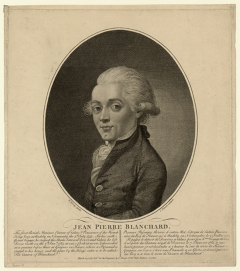
Jean-Pierre Blanchard
Wikipedia
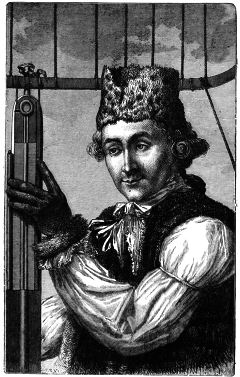
John Jeffries
Wikipedia
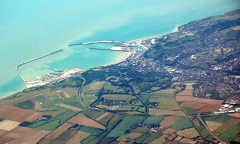
Dover, England
Wikipedia

balloon
Wikipedia

Dover, England
Wikipedia

Jean-Pierre Blanchard
Wikipedia

John Jeffries
Wikipedia

Dover
Wikipedia

Calais
Wikipedia

Balloon
Wikipedia

Paso de Calais
Wikipedia

Balloon (aeronautics)
Wikipedia

English Channel
Wikipedia

Gas balloon
Wikipedia

Hydrogen
Wikipedia
What Else Happened on January 7
Caesar heard the Senate's ultimatum and grinned. Twelve years of political maneuvering had led to this moment. The tribunes Mark Antony and Quintus Cassius race…
K’inich Kan Bahlam II. besteigt als Nachfolger seines im Vorjahr verstorbenen Vaters K'inich Janaab Pakal I. den Thron von Palenque. Er führt die intensive Baut…
The Byzantine palace looked more like a street brawl. Nikephoritzes, the tax collector everyone despised, was about to learn how much people hated him. Crowds s…
Mathilde l'Emperesse épouse l'empereur romain germanique Henri V du Saint-Empire à Worms.
He was 26 and stepping into a kingdom shaped by his father's careful political maneuvering. Alfonso IV would become known as the Brave, but not for battlefield …
Der Bischof von Stavanger, Guttorm Pålsson, ist der letzte dokumentierte Todesfall der großen Pestepidemie in Norwegen als Teil der Pest-Pandemie, der von 1347 …
Talk to History
Have a conversation with historical figures who witnessed this era. Ask questions, explore perspectives, and bring history to life.