

Egypt Reopens Suez: Nasser's Sovereignty Confirmed
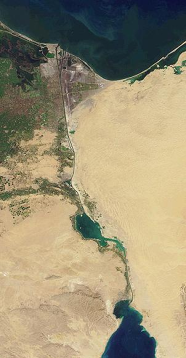
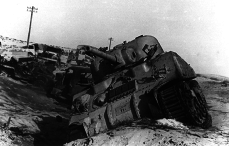
Egypt reopened the Suez Canal to international shipping on March 8, 1957, four months after British, French, and Israeli forces had invaded to seize control of the waterway. The canal reopened on Egypt's terms, under Egyptian management, with the former colonial powers humiliated and the United States and Soviet Union having demonstrated that the era of European imperial intervention was over. The Suez Crisis was the moment the old empires lost their nerve. Egyptian President Gamal Abdel Nasser had nationalized the Suez Canal Company on July 26, 1956, seizing the waterway that connected the Mediterranean to the Red Sea and through which two-thirds of Europe's oil supply passed. The canal had been operated by an Anglo-French company since its opening in 1869, and Britain held the largest share of stock. Nasser nationalized it to fund the Aswan High Dam after the United States and Britain withdrew their financing offer. Britain, France, and Israel secretly planned a joint military operation at the Protocol of Sevres in October 1956. Israel would invade the Sinai Peninsula, and Britain and France would intervene as supposed peacekeepers, occupying the Canal Zone. The plan worked militarily: Israeli forces swept across the Sinai in days, and British and French paratroopers seized Port Said on November 5. But the plan collapsed politically. President Eisenhower, furious at not being consulted, threatened to sell US holdings of British bonds, collapsing the pound sterling. The Soviet Union, simultaneously crushing the Hungarian Revolution, warned of nuclear retaliation. Facing economic ruin and superpower opposition, Britain agreed to a ceasefire on November 7, barely 48 hours after the landings. France followed. The withdrawal was complete by December. A United Nations Emergency Force, the first UN peacekeeping mission, was deployed to the Sinai. UN salvage teams cleared the canal of sunken ships that Egypt had scuttled to block traffic during the fighting. Egypt retained full sovereignty over the canal and established the Suez Canal Authority to operate it. The Suez Crisis ended Britain's pretension to great-power status, made Nasser the hero of the Arab world, and proved that Cold War superpowers would not tolerate independent European military adventures.
March 8, 1957
69 years ago
Key Figures & Places

What Else Happened on March 8
Ferdowsi finished his monumental epic, the Shāhnāmeh, after thirty years of meticulous labor. By recording the myths and history of ancient Persia in pure Persi…
His mother ruled for seventeen years while nobles tried to replace her with every available man — her husband, her ex-husband, even her teenage son. But Urraca …
They entered through the latrine chute. That's how Philip II's soldiers finally breached Richard the Lionheart's supposedly impregnable fortress after six month…
The butchers and bakers won. On the frozen fields of Hausbergen, Strasbourg's shopkeepers and guild members—armed with pikes they'd forged themselves—faced down…
Duke John of Finland established the city of Pori on the banks of the Kokemäenjoki River to consolidate trade along the Gulf of Bothnia. By relocating merchants…
The Spanish explorer stumbled onto a ghost city swallowed by jungle and didn't realize he'd found one of history's greatest astronomical observatories. Diego Ga…
Talk to History
Have a conversation with historical figures who witnessed this era. Ask questions, explore perspectives, and bring history to life.