Easter Glory: Bach's Oratorio Debut in Leipzig
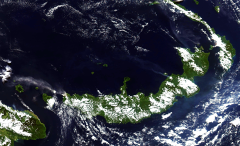
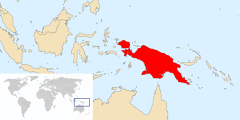
William Dampier completed the first European circumnavigation of New Britain, proving it was a separate island from New Guinea rather than a continental extension. His detailed charts and natural history observations from the voyage advanced European understanding of the Pacific and established him as one of the era's most important scientific explorers. Dampier's expedition aboard HMS Roebuck departed England in January 1699, tasked by the Admiralty with exploring the coastline of New Holland (Australia) and the surrounding islands. After surveying parts of western Australia's coast, Dampier sailed north to New Guinea and then east, navigating the treacherous waters between New Guinea and the island he named Nova Britannia. By circumnavigating the island, he proved it was separated from New Guinea by a strait that now bears his name, Dampier Strait. His accounts of the flora, fauna, and indigenous peoples he encountered were among the most detailed produced by any European explorer of the period. Dampier was a peculiar figure: a former buccaneer who had participated in pirate raids across the Pacific and Caribbean before reinventing himself as a scientific explorer. His 1697 book A New Voyage Round the World, based on his earlier adventures, had been a bestseller that caught the Admiralty's attention. His botanical collections and natural history notes influenced later scientists, including Charles Darwin, who carried Dampier's books aboard the Beagle. The Roebuck expedition ended badly when the ship, already leaking severely, sank at Ascension Island on the return voyage, and Dampier was subsequently court-martialed for cruelty to his lieutenant. Yet his contributions to Pacific geography and natural history remained invaluable.
March 26, 1700
326 years ago
What Else Happened on March 26
Emperor Maurice elevated his son Theodosius to the rank of co-emperor, formally securing the Theodosian dynasty’s hold on the Byzantine throne. This calculated …
The first Eid al-Fitr wasn't planned—it emerged from exhaustion. After Muhammad and his followers completed the first mandatory Ramadan fast in 624 CE, they gat…
The body vanished during a donkey ride outside Cairo, but the Fatimid court pretended their caliph was still alive for six weeks. Al-Hakim bi-Amr Allah had terr…
Pope John XIX crowned Conrad II as Holy Roman Emperor in Rome, formalizing the Salian dynasty's grip on power. This coronation solidified the monarch's authorit…
Pope John XIX crowned Conrad II as Holy Roman Emperor in St. Peter's Basilica, solidifying the Salian dynasty's grip on power. This ceremony affirmed the allian…
He was supposed to be temporary. When Saladin's uncle Shirkuh died just two months after conquering Egypt, the 31-year-old Kurdish warrior took command of a lan…
Talk to History
Have a conversation with historical figures who witnessed this era. Ask questions, explore perspectives, and bring history to life.