

Milan's Five Days: Citizens Drive Austrian Army Out
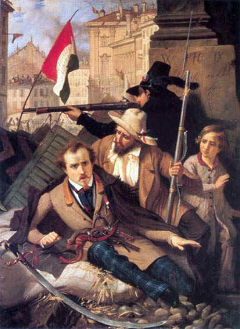
Milanese citizens erected barricades and fought Austrian troops street by street for five extraordinary days beginning on March 18, 1848, driving Marshal Josef Radetzky and his 20,000-strong garrison out of the city using little more than paving stones, furniture, and determination. The Five Days of Milan became the most celebrated urban uprising of the 1848 revolutions and demonstrated that civilians could defeat a professional army through organized resistance. The uprising erupted in the context of the revolutionary wave sweeping Europe in early 1848. News of the February Revolution in Paris and the March uprising in Vienna emboldened Milanese liberals and nationalists who had chafed under Austrian rule since the Congress of Vienna assigned Lombardy-Venetia to the Habsburg Empire in 1815. On March 18, what began as a civic protest rapidly escalated into armed insurrection. The Milanese constructed approximately 1,600 barricades across the city's narrow medieval streets, using overturned carriages, furniture, timber, and cobblestones to create obstacles that neutralized Austrian cavalry and artillery advantages. Civilians fought with hunting rifles, makeshift pikes, and boiling water poured from upper-story windows. Women and children carried ammunition and supplies to the barricades. The city's municipal council organized a provisional government that coordinated the defense. Radetzky, one of the most experienced commanders in the Austrian army, attempted to suppress the uprising with artillery bombardment and infantry assaults but found his forces channeled into killzones by the barricade network. After five days of escalating casualties and diminishing ammunition, Radetzky withdrew his garrison from Milan on March 22, retreating toward the fortresses of the Quadrilateral in Venetia. The victory was short-lived. King Charles Albert of Piedmont-Sardinia declared war on Austria but was defeated at the Battle of Custoza in July 1848. Radetzky recaptured Milan in August, and Austrian control was reimposed for another decade. The Five Days proved that Italian nationalism had the popular energy to challenge empires, even if it lacked the military power to sustain independence alone.
March 18, 1848
178 years ago
Key Figures & Places



What Else Happened on March 18

The Roman Senate proclaimed Gaius Julius Caesar Augustus Germanicus emperor on March 18, 37 AD, immediately after the death of Tiberius. The twenty-four-year-ol…
The Roman Senate bypassed the late Emperor Tiberius’s will to install his grand-nephew, Caligula, as the new ruler. This swift transition ended the uncertainty …
His mother tried to bribe the soldiers with gold. It didn't work. Emperor Alexander Severus and Julia Mamaea — who'd ruled Rome through her 26-year-old son for …
Caliph Abu Bakr crushed the final major resistance of the Ridda Wars, consolidating the Arabian Peninsula under a single central authority. This victory transfo…
A massive earthquake shattered the Levant and the Arabian Peninsula, collapsing structures across a vast region and claiming up to 20,000 lives. This disaster d…
Frederick II crowned himself King of Jerusalem inside the Church of the Holy Sepulchre, securing the city through diplomacy rather than the bloodshed typical of…
Talk to History
Have a conversation with historical figures who witnessed this era. Ask questions, explore perspectives, and bring history to life.