

Pirate Cofresí Captured: Caribbean Lawlessness Ends
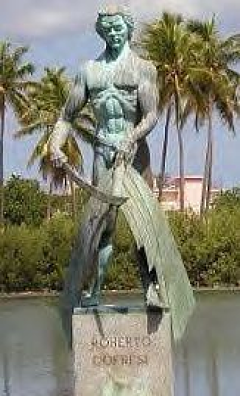
Spanish colonial authorities had been hunting Roberto Cofresí for five years, and what finally ended his career was not a fleet action or a clever trap but a combined Spanish-American operation off the coast of Puerto Rico. Cofresí, one of the last pirates to operate successfully in the Caribbean, was captured on March 5, 1825, after his ship was overtaken and he was wounded in the fighting. His execution four weeks later marked the effective end of Caribbean piracy as a viable enterprise. Cofresí was born around 1791 in Cabo Rojo, on Puerto Rico's southwestern tip. The region's poverty, combined with the chaos of Latin American independence wars that disrupted colonial trade routes, created an environment where piracy remained a rational economic choice for men with seamanship skills and few legitimate opportunities. Cofresí assembled a small crew and operated a fast vessel from the Mona Passage, the strait between Puerto Rico and Hispaniola through which much of the Caribbean's commercial shipping passed. His targets were primarily merchant vessels carrying goods between Caribbean ports, and he was effective enough that insurance rates for shipping in the region increased measurably during his active years. Unlike the pirate captains of the golden age a century earlier, Cofresí operated in waters increasingly patrolled by American, British, and Spanish naval forces. His survival depended on local support: coastal communities in southwestern Puerto Rico provided shelter, supplies, and intelligence in exchange for shares of captured goods. The campaign against Cofresí intensified after his raids began affecting American commercial interests. The USS Grampus, a naval schooner assigned to anti-piracy duties in the Caribbean, joined Spanish naval forces in pursuing him. The combined force engaged Cofresí's vessel in a running battle, during which he was wounded and his crew overwhelmed. Cofresí was transported to San Juan, tried by a Spanish military court, and executed by firing squad on March 29, 1825. He was approximately 34 years old. His capture coincided with the broader extinction of Caribbean piracy, as the major naval powers established permanent patrol stations and independent Latin American nations began enforcing maritime law in their coastal waters.
March 5, 1825
201 years ago
Key Figures & Places



What Else Happened on March 5
Julian the Apostate brought 90,000 soldiers and a library when he marched from Antioch into Persia in March 363 AD. The last pagan Roman emperor was attempting …
Naser Khosrow was forty years old, hungover, and disgusted with himself when he decided to abandon his comfortable government career and walk across the Middle …
Grand Duke Traidenis crushed the Livonian Order at the Battle of Aizkraukle, killing the Master of the Order, Ernst von Rassau, and seventy knights. This decisi…
King Henry VII granted John Cabot and his sons royal authority to sail under the English flag in search of new lands. This expedition led to the first European …
The Vatican waited 73 years to ban Copernicus's book. Why? Because nobody thought it was serious. When *On the Revolutions of the Heavenly Spheres* appeared in …
The Catholic Church officially banned Nicolaus Copernicus’s *De revolutionibus orbium coelestium* in 1616, declaring his heliocentric model formally heretical. …
Talk to History
Have a conversation with historical figures who witnessed this era. Ask questions, explore perspectives, and bring history to life.