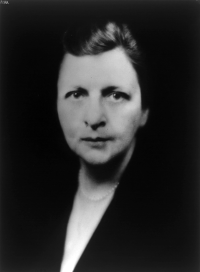
Frances Perkins Makes History: First Woman Cabinet Secretary
Frances Perkins walked into Franklin Roosevelt's cabinet on March 4, 1933, with a list of non-negotiable demands: a 40-hour work week, minimum wage, unemployment insurance, a ban on child labor, and a federal social security program. Roosevelt agreed to all of them. Over the next twelve years, Perkins delivered every item on that list, reshaping the American social contract more fundamentally than any other single cabinet member in the nation's history. Perkins had been radicalized decades earlier. On March 25, 1911, she watched from the street as 146 garment workers, mostly young immigrant women, jumped to their deaths or burned alive in the Triangle Shirtwaist Factory fire in New York City. She was 31 years old, already active in reform movements, and the fire transformed her from an advocate into an activist with political ambition. She became New York's industrial commissioner under Governor Roosevelt, and when he reached the White House, she was his first choice for Secretary of Labor. Her appointment was controversial not because of her gender — though that generated enormous attention — but because organized labor preferred one of their own. The American Federation of Labor's William Green openly opposed a non-union member heading the department. Perkins won them over through competence. She chaired the Committee on Economic Security that drafted the Social Security Act of 1935, the most consequential piece of social legislation in American history, establishing old-age pensions, unemployment insurance, and welfare payments. She pushed through the Fair Labor Standards Act of 1938, which set the first federal minimum wage at 25 cents an hour, established the 40-hour work week, and banned most child labor. She created the Civilian Conservation Corps, mediated hundreds of labor disputes through the Conciliation Service, and resisted proposals to draft women into military service during World War II so they could fill civilian jobs instead. Perkins served twelve years as Secretary of Labor, longer than anyone before or since, and remains the only cabinet member to have served an entire presidential tenure from inauguration to death. Every American who collects Social Security, earns overtime pay, or works a 40-hour week is living in the country Frances Perkins built.
March 4, 1933
93 years ago
Key Figures & Places
What Else Happened on March 4
Roman soldiers executed Adrian of Nicomedia after he converted to Christianity upon witnessing the steadfast faith of prisoners he was tasked to guard. His deat…
Claudius officially designated his stepson Nero as princeps iuventutis, signaling his status as the empire's heir apparent. This title fast-tracked the teenager…
Roman soldiers executed Adrian of Nicomedia for refusing to sacrifice to pagan gods during the Great Persecution under Emperor Diocletian. His public defiance a…
The Roman executioner couldn't do it. Adrian of Nicomedia, imperial officer in charge of torturing Christians, watched prisoners refuse to renounce their faith …
He'd just been regent for his grandson — but Yang Jian couldn't resist. The former Northern Zhou general forced the seven-year-old emperor to abdicate and crown…
The first time Croats called themselves Croats in their own language wasn't carved on a monument or proclaimed in a grand assembly. It was written on a piece of…
Talk to History
Have a conversation with historical figures who witnessed this era. Ask questions, explore perspectives, and bring history to life.