Cortés Lands in Mexico: Aztec Empire Falls
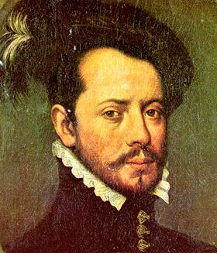
Hernan Cortes arrived on the Yucatan coast on March 4, 1519, with 500 soldiers, 100 sailors, and 16 horses. Within two and a half years, this small force would destroy the Aztec Empire, one of the largest and most sophisticated civilizations in the Americas, and claim Mexico for Spain. The conquest was accomplished less through military superiority than through disease, diplomacy with disaffected indigenous groups, and a willingness to commit atrocities that shocked even some of Cortes's own men. Cortes had been authorized by the governor of Cuba, Diego Velazquez, to explore the Mexican coast and trade with natives. Velazquez explicitly prohibited colonization. Cortes ignored those orders almost immediately, founding the settlement of Villa Rica de la Vera Cruz and having his men elect him captain-general, a legal maneuver that gave him authority independent of Velazquez. He then scuttled his ships to prevent any of his men from sailing back to Cuba to report his insubordination. The march inland revealed a continent of warring nations. The Aztec Empire, ruled from the island city of Tenochtitlan by Emperor Moctezuma II, controlled central Mexico through tribute extraction that generated deep resentment among subject peoples. Cortes exploited this brilliantly. The Tlaxcalans, who had fought the Aztecs for generations, became his most important allies, eventually providing thousands of warriors who outnumbered the Spanish many times over. Cortes entered Tenochtitlan in November 1519 and took Moctezuma hostage. A Spanish massacre of Aztec nobles during a religious festival in May 1520 triggered an uprising that drove the Spanish out of the city during the Noche Triste, in which hundreds of Spaniards and thousands of Tlaxcalan allies died. Cortes regrouped, built brigantines to control the lake surrounding Tenochtitlan, and besieged the city for 75 days. Tenochtitlan fell on August 13, 1521, by which time smallpox had killed roughly half its population. The conquest of Mexico opened the door to three centuries of Spanish colonial rule across the Americas.
March 4, 1519
507 years ago
Key Figures & Places
What Else Happened on March 4
Roman soldiers executed Adrian of Nicomedia after he converted to Christianity upon witnessing the steadfast faith of prisoners he was tasked to guard. His deat…
Claudius officially designated his stepson Nero as princeps iuventutis, signaling his status as the empire's heir apparent. This title fast-tracked the teenager…
Roman soldiers executed Adrian of Nicomedia for refusing to sacrifice to pagan gods during the Great Persecution under Emperor Diocletian. His public defiance a…
The Roman executioner couldn't do it. Adrian of Nicomedia, imperial officer in charge of torturing Christians, watched prisoners refuse to renounce their faith …
He'd just been regent for his grandson — but Yang Jian couldn't resist. The former Northern Zhou general forced the seven-year-old emperor to abdicate and crown…
The first time Croats called themselves Croats in their own language wasn't carved on a monument or proclaimed in a grand assembly. It was written on a piece of…
Talk to History
Have a conversation with historical figures who witnessed this era. Ask questions, explore perspectives, and bring history to life.