First Blood Bank Opens: Chicago Saves Lives with Stored Blood
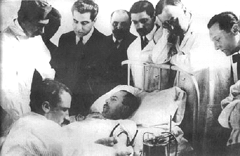
Dr. Bernard Fantus established the world's first hospital blood bank at Cook County Hospital in Chicago on March 15, 1937, creating a system that transformed blood from a perishable emergency resource into a storable medical commodity. Fantus coined the term "blood bank" itself, drawing an analogy to a financial institution where deposits could be made in advance and withdrawals made when needed. Before Fantus's innovation, blood transfusion required a direct donor-to-patient transfer performed simultaneously in the operating room. Finding a compatible donor on short notice was often impossible, and patients frequently died from hemorrhage or surgical shock while doctors scrambled to locate a match. The discovery that sodium citrate could prevent blood from clotting and that refrigeration could preserve it for several days had been established during World War I, but no hospital had created a systematic storage and distribution system. Fantus, a Hungarian-born physician who had joined Cook County Hospital's staff in 1912, designed a system where donors could give blood in advance, which would be typed, tested, refrigerated, and cataloged for later use. Donors received credit for their contributions, which they or their family members could draw upon if they later needed transfusions. The system addressed both the supply problem and the timing problem that made emergency transfusions so unreliable. Cook County Hospital's blood bank proved so successful that hospitals across the country began establishing their own within months. The American Association of Blood Banks was founded in 1947 to standardize practices. The Red Cross launched its national blood collection program during World War II, building directly on the organizational model Fantus had created. Modern blood banking saves an estimated 4.5 million American lives per year. The entire global infrastructure of blood collection, storage, testing, and distribution traces its origin to a single refrigerator in a Chicago public hospital.
March 15, 1937
89 years ago
Key Figures & Places

What Else Happened on March 15
He walked into Rome on foot instead of riding a chariot — and the crowd knew exactly what that meant. Aulus Manlius Vulso's ovation for ending the war with Veii…
Twenty-three stab wounds. The most powerful man in the Roman Republic bled out at the base of Pompey's statue on the Ides of March, 44 BC, killed by men he had …
The conspirators cornered Julius Caesar in the portico of Pompey's Theatre on March 15, 44 BC, with Tillius Cimber presenting a petition as the signal to attack…
He was selling straw sandals when the empire fell apart. Liu Bei's bloodline connected him to the Han emperors, but through a prince from 150 years earlier—dist…
Sun Hao of Eastern Wu surrendered to the Jin emperor Sima Yan, ending the Three Kingdoms period that had fractured China for decades. This capitulation unified …
He'd already killed most of his family. But Constantius II was desperate — Persian armies threatened the eastern frontier while he fought usurpers in the West, …
Talk to History
Have a conversation with historical figures who witnessed this era. Ask questions, explore perspectives, and bring history to life.