Grant Takes Command: Union Victory Secured
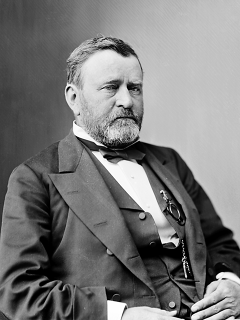
Ulysses S. Grant was promoted to lieutenant general on March 9, 1864, a rank no American officer had held since George Washington, and placed in command of all Union armies. He established his headquarters with the Army of the Potomac in Virginia the following day, and within two months, the war that had ground on for three years finally had a commander willing to use the Union's overwhelming advantages in manpower and industry to destroy the Confederacy through relentless, simultaneous pressure on every front. Grant's path to supreme command had been built on results. While commanders in the eastern theater lost or stalemated against Robert E. Lee, Grant had captured Fort Donelson, won at Shiloh despite being surprised, taken Vicksburg after a brilliant campaign that split the Confederacy in half, and broken the Confederate siege of Chattanooga. President Lincoln, who had cycled through commanders with increasing frustration, told an aide: "I can't spare this man. He fights." Congress revived the rank of lieutenant general specifically for Grant. Lincoln signed the commission and presented it at a White House ceremony on March 9, 1864. Grant chose not to command from Washington, where political interference had hampered every previous general-in-chief. Instead, he traveled to Brandy Station, Virginia, and attached himself to General George Meade's Army of the Potomac, effectively directing its operations while leaving Meade in nominal tactical command. Grant's strategy was unprecedented in its coordination. He ordered simultaneous advances across the entire theater of war. The Army of the Potomac would engage Lee in Virginia. William Tecumseh Sherman would drive from Chattanooga toward Atlanta. Benjamin Butler would advance up the James River toward Richmond. Franz Sigel would operate in the Shenandoah Valley. Nathaniel Banks would move against Mobile, Alabama. The Confederacy would be unable to shift reinforcements between theaters if every front was active simultaneously. The cost was staggering. The Overland Campaign, which began in May 1864 at the Battle of the Wilderness, produced roughly 55,000 Union casualties in thirty days as Grant fought through the Wilderness, Spotsylvania, and Cold Harbor. Northern newspapers called him a "butcher." Grant continued advancing, crossing the James River and besieging Petersburg in June, beginning the nine-month siege that would end the war. Grant's appointment on March 10, 1864, marked the moment the Union found a general who understood that the war would be won not by capturing territory but by destroying armies.
March 10, 1864
162 years ago
Key Figures & Places
What Else Happened on March 10
Rome's treasury was empty, its citizens were exhausted, and the First Punic War had dragged on for 23 years when a group of wealthy Romans did something extraor…
Maximian rode into Carthage celebrating victory over the Berbers, but he'd actually spent five years struggling to control tribes who knew every mountain pass a…
Liu Zhiyuan waited just sixteen days after the Khitan invaders abandoned Kaifeng before declaring himself emperor and founding the Later Han dynasty. The former…
Christopher Columbus sailed for Spain, leaving his brother Bartholomew to govern the fledgling settlement of Santo Domingo. This departure solidified the first …
The bishop ran out of wind. Fray Tomás de Berlanga was sailing from Panama to Peru in 1535 when his ship hit the doldrums — dead calm for six days straight. Oce…
The pretender won because his enemy's spiritual leader insisted on joining the battlefield. Abuna Petros II, patriarch of the Ethiopian Orthodox Church, rode al…
Talk to History
Have a conversation with historical figures who witnessed this era. Ask questions, explore perspectives, and bring history to life.