
Kerner Report Warns: America Splits Into Two Societies
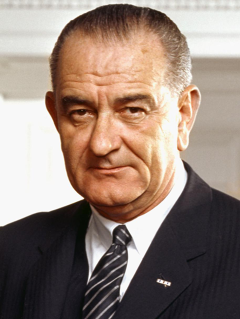
The Kerner Commission delivered the bluntest assessment of American race relations ever produced by a presidential body, and the president who created it refused to accept the findings. The National Advisory Commission on Civil Disorders, chaired by Illinois Governor Otto Kerner Jr., released its report on February 29, 1968, warning that the United States was "moving toward two societies, one black, one white — separate and unequal." The report blamed white racism, not Black militancy or outside agitators, for the wave of urban uprisings that had swept American cities. President Lyndon Johnson had created the commission in July 1967 after riots in Newark and Detroit killed dozens and destroyed entire neighborhoods. Johnson expected the commission to blame radical agitators and recommend tougher policing. Instead, the eleven-member panel — which included moderate politicians, business leaders, and civil rights figures — investigated twenty-three cities where disorders had occurred and reached a conclusion that challenged the entire American political establishment. The report documented in meticulous detail how decades of discriminatory housing policies, employment practices, police brutality, and inadequate public services had created the conditions for urban rebellion. It recommended massive federal investment in jobs, housing, education, and welfare programs, calling for the creation of two million new jobs, six million new housing units, and a guaranteed minimum income. The price tag would have dwarfed the Great Society programs Johnson had already struggled to fund alongside the Vietnam War. Johnson received the report and effectively buried it. He refused to accept its recommendations, partly because of the cost and partly because blaming white America for Black unrest was politically toxic in an election year. The report sold over two million copies and became one of the most widely read government documents in American history, but its policy recommendations were largely ignored. Five weeks after its release, Martin Luther King Jr. was assassinated, and the urban uprisings the commission had warned about erupted again in over a hundred cities. The report's diagnosis of two Americas has been cited repeatedly in every subsequent decade, most recently after the police killing of George Floyd in 2020, which suggests its central finding has been more durable than anyone in power has been willing to address.
February 29, 1968
58 years ago
Key Figures & Places
What Else Happened on February 29
Odo wasn't supposed to be king. He was a count, not a Carolingian. But when Vikings besieged Paris in 885, he held the city for eleven months while Emperor Char…
Christopher Columbus was stranded, starving, and running out of options when he pulled a bluff that would make a poker player proud. Marooned on Jamaica's north…
Abel Tasman left Batavia in 1644 to find whether New Guinea connected to the mysterious southern land he'd glimpsed two years earlier. He sailed the entire nort…
Abel Tasman left Batavia on January 29, 1644, commanding three ships with orders to find out if New Guinea connected to the mysterious southern land he'd glimps…
The attack came at four in the morning during a February blizzard, and the snowdrifts that were supposed to protect the town became the instrument of its destru…
Sweden once had a February 30th — the only country in recorded history to add that nonexistent date to its calendar — and the reason involves one of the most sp…
Talk to History
Have a conversation with historical figures who witnessed this era. Ask questions, explore perspectives, and bring history to life.