Eden Resigns: Britain's Rift Over Appeasement Deepens
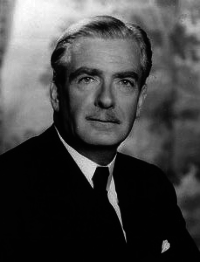
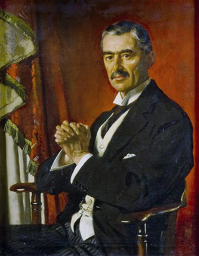
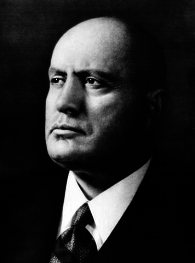
Anthony Eden walked out of the British Cabinet on February 20, 1938, over a principle that his prime minister considered irrelevant: that dictators should not be rewarded for aggression. Eden’s resignation as Foreign Secretary was the most dramatic break in Neville Chamberlain’s government before Munich, a public signal that Britain’s appeasement policy had opponents at the highest level. Eden was 40 years old, the most popular politician in Britain, and he was throwing away the career trajectory of a future prime minister over a disagreement about talking to Mussolini. The immediate cause was Chamberlain’s eagerness to negotiate directly with Benito Mussolini’s Italy without preconditions. Eden believed that opening talks while Italian "volunteers" were fighting for Franco in Spain and Italian forces occupied Ethiopia would legitimize aggression and undermine the League of Nations. Chamberlain believed that personal diplomacy with dictators could prevent another war. The two men had been clashing privately for months. Eden’s concerns went deeper than Italy. He saw Chamberlain’s approach to foreign policy as fundamentally naive — a businessman’s belief that reasonable men could always reach a deal, applied to leaders who viewed concessions as weakness. Eden had dealt directly with Hitler and Mussolini and harbored no illusions about their ambitions. He also resented Chamberlain’s habit of conducting back-channel negotiations through personal emissaries, bypassing the Foreign Office entirely. The resignation speech in the House of Commons was measured but devastating. Eden made clear that the disagreement was not personal but structural: "I do not believe that we can make progress in European appeasement if we allow the impression to gain currency abroad that we yield to constant pressure." Winston Churchill, watching from the backbenches, recognized a potential ally. The anti-appeasement faction in Parliament grew stronger. Eden had been right about appeasement, but rightness in 1938 brought only a decade of waiting — he would not become prime minister until 1955, and his own premiership would end in the Suez disaster that proved Eden had learned the lessons of appeasement too well.
February 20, 1938
88 years ago
Key Figures & Places
What Else Happened on February 20
The Visconti family was fighting itself. Lodrisio Visconti, exiled from Milan, hired the Company of St. George — 2,500 German mercenaries who'd never lost a bat…
King Christian I of Denmark pawned the Orkney and Shetland islands to Scotland to cover his daughter Margaret’s unpaid dowry. This desperate financial maneuver …
King Christian I of Denmark and Norway pledged the Orkney and Shetland islands to Scotland as collateral for his daughter Margaret’s dowry. When he failed to pa…
Ponce de León left Puerto Rico with 200 settlers, two ships, and a land grant from the Spanish Crown. He'd "discovered" Florida eight years earlier — meaning he…
Nine-year-old Edward VI received the crown at Westminster Abbey, becoming the first English monarch raised as a Protestant. His ascension accelerated the Englis…
Yohannan Sulaqa traveled to Rome to profess his Catholic faith, securing his ordination as the first Patriarch of the Chaldean Catholic Church. This formal unio…
Talk to History
Have a conversation with historical figures who witnessed this era. Ask questions, explore perspectives, and bring history to life.