Kyoto Protocol Signed: 150 Nations Pledge to Cut Emissions
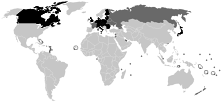
For the first time in human history, the majority of the world's governments agreed to legally binding limits on greenhouse gas emissions. The Kyoto Protocol, adopted on December 11, 1997, after ten days of tense negotiations in Japan, required 37 industrialized nations to cut emissions an average of 5.2 percent below 1990 levels by 2012. The agreement represented the first concrete international attempt to address the science of climate change with enforceable commitments. The negotiations built on the 1992 United Nations Framework Convention on Climate Change, which had established the principle of "common but differentiated responsibilities." Developing nations, led by China and India, argued that industrialized countries had created the problem and should bear the cost of fixing it. The United States, then the world's largest emitter, pushed back against binding targets without equivalent commitments from developing economies. Vice President Al Gore flew to Kyoto and broke a diplomatic logjam by signaling American willingness to accept deeper cuts. The final text committed industrialized nations to specific reduction targets while exempting developing countries from mandatory caps. The European Union pledged an 8 percent reduction, Japan 6 percent, and the United States 7 percent. Mechanisms for carbon trading and clean development credits added economic flexibility. The protocol's legacy proved deeply mixed. The U.S. Senate never ratified the agreement, and President George W. Bush formally withdrew American participation in 2001, calling the treaty fatally flawed. Canada also later pulled out after missing its targets. Despite these setbacks, the Kyoto Protocol established the legal architecture for international climate cooperation and directly shaped the 2015 Paris Agreement, which achieved broader participation by allowing nations to set their own targets.
December 1, 1997
29 years ago
Key Figures & Places
What Else Happened on December 1
Pope Leo III staggered into St. Peter's, his face still scarred from the Roman mob that tried to gouge out his eyes and cut out his tongue six months earlier. H…
Charlemagne sat in judgment of a pope. The charges against Leo III were serious: perjury, adultery, simony. They were brought by nephews of his predecessor who'…
Henry V rode through Paris's gates with 300 knights. The French king was alive but mad, locked in his own palace while his son-in-law claimed the throne. No sie…
Henry V paraded through the streets of Paris alongside his father-in-law, Charles VI, asserting his claim to the French throne following the Treaty of Troyes. T…
Queen Elizabeth I knighted her favorites Christopher Hatton and Thomas Heneage during a private ceremony at Windsor Castle. By elevating these men to the knight…
A 46-year-old spymaster with a network stretching from Venice to Constantinople got his knighthood — not for battlefield valor but for intercepting letters. Wal…
Talk to History
Have a conversation with historical figures who witnessed this era. Ask questions, explore perspectives, and bring history to life.