U.S. Recognizes Soviets: Diplomacy After Turmoil
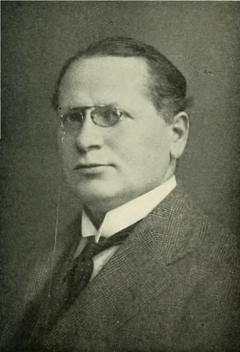
President Franklin Roosevelt and Soviet Foreign Commissar Maxim Litvinov exchanged diplomatic notes in Washington, formally establishing relations between the United States and the Soviet Union after sixteen years of official non-recognition. The agreement ended the longest diplomatic freeze between two major world powers in the twentieth century and began an uneasy partnership that would prove indispensable when both nations faced a common enemy less than a decade later. The United States had refused to recognize the Bolshevik government since the 1917 Revolution. American objections were both ideological and practical. The Soviets had repudiated tsarist debts owed to American creditors, nationalized foreign-owned property without compensation, promoted worldwide communist revolution through the Comintern, and maintained a system of government that Americans found fundamentally repugnant. Three successive Republican administrations maintained that recognition would legitimize a regime built on repression. Roosevelt, inaugurated in March 1933, took a more pragmatic view. The Great Depression had devastated American manufacturing, and the Soviet Union represented a potentially enormous export market. More urgently, Japan's 1931 invasion of Manchuria and Hitler's rise to power in Germany created a security landscape where American isolation from a major Eurasian power looked increasingly dangerous. Roosevelt also faced domestic pressure from American businesses eager to trade with the Soviets. The negotiations were conducted largely through back channels before Litvinov's arrival in Washington. The Soviets agreed to stop funding communist propaganda in the United States, promised to protect the rights of American citizens in the USSR, and pledged to negotiate a settlement of the debt question. Roosevelt sent a warm telegram expressing hope for permanently "normal and friendly" relations.
November 16, 1933
93 years ago
Key Figures & Places
What Else Happened on November 16
Emperor Justinian published the second and final revision of his legal code, the Codex Justinianus, consolidating 1,000 years of Roman law into a single systema…
Emperor Li Jing of Southern Tang dispatched an army of 10,000 under General Bian Hao to conquer the Chu Kingdom in 951, quickly overrunning its defenses and dep…
He was 1,500 miles away when he became king. Edward I learned of Henry III's death while still in Sicily, returning from the Holy Land — and simply didn't rush …
Jadwiga was crowned King (not Queen) of Poland at age 10, with the masculine title chosen to assert her full sovereign authority. She married Lithuanian Grand D…
The victims never existed. That's the core of it. The "Holy Child of La Guardia" — supposedly a murdered Christian boy whose heart was used in Jewish ritual — w…
Francisco Pizarro and 168 Spanish soldiers ambushed Inca Emperor Atahualpa in the main square of Cajamarca, killing thousands of unarmed attendants and capturin…
Talk to History
Have a conversation with historical figures who witnessed this era. Ask questions, explore perspectives, and bring history to life.