Today In History logo TIH
Alexander Hamilton, writing under the pseudonym "Publius," published the first o
Featured Event 1787 Event

October 27

Federalist Papers Begin: Argument for Constitution

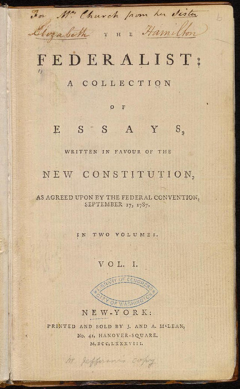
Alexander Hamilton, writing under the pseudonym "Publius," published the first of what would become 85 essays in the New York Independent Journal on October 27, 1787, launching the most influential argument for the ratification of the United States Constitution. The Federalist Papers, written over the next eight months by Hamilton, James Madison, and John Jay, remain the most authoritative interpretation of the Constitution's meaning and the most celebrated work of political philosophy produced in America. The essays were born from political necessity. The Constitutional Convention in Philadelphia had adjourned on September 17, and the proposed Constitution now faced ratification votes in each of the thirteen states. New York was among the most hostile. Governor George Clinton openly opposed ratification, and the state's Anti-Federalist faction argued that the new government would destroy state sovereignty, create a monarchical presidency, and trample individual rights. Hamilton, a New York delegate to the Convention and a fierce nationalist, recruited Madison and Jay to help him make the case for the new charter in the press. Hamilton wrote the majority of the essays, roughly 51, while Madison authored 29, including the most famous, Federalist No. 10, which argued that a large republic was better equipped than a small one to control the dangers of faction. Jay, who fell ill early in the project, contributed only five. The three men wrote at extraordinary speed, sometimes producing multiple essays per week, publishing them in newspapers and then collecting them in bound volumes. The essays addressed every major objection to the Constitution: the power of the executive, the independence of the judiciary, the balance between federal and state authority, the necessity of a standing army, and the absence of a bill of rights. Federalist No. 78, in which Hamilton laid out the case for judicial review, became the intellectual foundation for the Supreme Court's assertion of that power in Marbury v. Madison sixteen years later. New York ratified the Constitution by a narrow margin of 30 to 27 in July 1788. Whether the Federalist Papers swayed the decisive votes is debatable, but their lasting influence is not. Supreme Court justices have cited them in hundreds of opinions, and they remain required reading in constitutional law courses worldwide.

October 27, 1787

239 years ago

Key Figures & Places
What Else Happened on October 27

Talk to History

Have a conversation with historical figures who witnessed this era. Ask questions, explore perspectives, and bring history to life.

Start Talking