

FLSA Enacted: Minimum Wage and 40-Hour Week Born
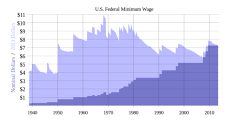
President Franklin Roosevelt signed the Fair Labor Standards Act on June 25, 1938, but the law took effect on October 24, establishing for the first time a national minimum wage, a maximum workweek, and a federal prohibition on child labor. The act covered roughly 11 million American workers and represented the most sweeping federal intervention in workplace conditions since the Progressive Era. The FLSA set the initial minimum wage at 25 cents per hour, roughly $5.25 in today's dollars, with provisions to raise it to 40 cents over seven years. The maximum workweek was capped at 44 hours, dropping to 40 hours by 1940, with mandatory overtime pay at one and a half times the regular rate for any hours beyond the limit. Employment of children under 16 in most industries was banned outright, and children under 18 were prohibited from hazardous occupations. Roosevelt had been pushing for labor standards legislation since his first term, but Southern Democrats in Congress resisted fiercely, fearing that wage floors would disrupt the low-wage agricultural and textile economies that sustained their states. The bill passed only after extensive compromises that exempted farmworkers, domestic servants, and employees of small businesses, exclusions that disproportionately affected Black workers and would take decades to close. The Supreme Court upheld the act's constitutionality in 1941, overruling a line of earlier decisions that had struck down state minimum wage laws. The consequences reshaped American working life. Before the FLSA, twelve-hour days, six-day weeks, and child labor were common in factories, mines, and mills across the country. The act's overtime provisions created powerful economic incentives for employers to hire additional workers rather than extend existing shifts, helping to reduce the persistent unemployment of the Depression years. Every subsequent expansion of the minimum wage, every overtime dispute, and every child labor prosecution traces its legal authority to the framework established when the FLSA took effect. The 40-hour workweek that most Americans take for granted was a legislative invention, not a natural condition, and October 24, 1938, is the date it became law.
October 24, 1938
88 years ago
Key Figures & Places

What Else Happened on October 24
Vespasian’s legions crushed the forces of Emperor Vitellius at the Second Battle of Bedriacum, ending the chaotic Year of the Four Emperors. This decisive victo…
Vitellius had held Rome for eight months. His soldiers were drunk and undisciplined. Antonius Primus commanded legions from the Danube—hardened troops who'd bee…
Afonso Henriques took Lisbon back from the Moors with help from 13,000 Crusaders who'd stopped on their way to the Holy Land. The siege lasted four months. The …
The cathedral had burned in 1194. Only the crypt and west facade survived. Rebuilding took 66 years. King Louis IX attended the dedication with his entire court…
Qutuz had stopped the Mongols at Ain Jalut two months earlier, the first time anyone had defeated them in open battle. He was returning to Cairo in triumph. Bai…
Chartres Cathedral was dedicated on October 24, 1260, in the presence of King Louis IX—Saint Louis. Construction had taken 66 years. The previous cathedral burn…
Talk to History
Have a conversation with historical figures who witnessed this era. Ask questions, explore perspectives, and bring history to life.