Reno Brothers Rob Train: America's First Heist
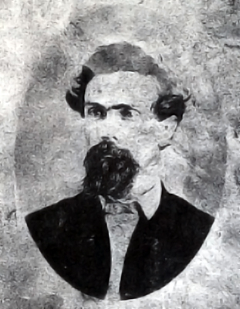
Four brothers from southern Indiana pulled off the crime that launched a genre. On October 6, 1866, John and Simeon Reno, along with Frank Sparkes and another accomplice, boarded an Ohio and Mississippi Railway train near Seymour, Indiana, overpowered the express car messenger, and shoved a safe containing $13,000 off the moving train. They had just committed the first robbery of a moving train in American history. The Reno brothers — John, Frank, Simeon, and William — had learned their trade during the Civil War, when the chaos of wartime made banditry easy and prosecution difficult. Seymour, a railroad junction town straddling Jackson County, became their base of operations. Local law enforcement was either intimidated or complicit. The brothers operated with near-impunity, supplementing train robbery with counterfeiting, burglary, and political corruption. The October 1866 robbery was modest by later standards, but it demonstrated a criminal model that would be replicated across the American West for the next four decades. The express car — a railroad car carrying safes filled with payrolls, gold, and currency — was a mobile bank with minimal security, roaring through sparsely populated territory on a published schedule. The vulnerability was obvious once someone demonstrated the method. The Renos escalated. In May 1868, they robbed another train near Marshfield, Indiana, of $96,000 — equivalent to roughly $2 million today. This robbery drew national attention and the involvement of the Pinkerton National Detective Agency, which Allan Pinkerton had built into America's preeminent private law enforcement organization. Pinkerton agents tracked the gang across multiple states. Justice for the Renos came not from courts but from a mob. On December 12, 1868, a vigilance committee of several hundred men — some historians believe they were organized by the Pinkertons themselves — stormed the New Albany, Indiana, jail where Frank, Simeon, and William Reno were awaiting trial. The brothers were dragged from their cells and hanged from the jail's rafters. John Reno, held in a different facility, escaped the mob and served time in prison. The Reno template inspired Jesse James, Butch Cassidy, and every train robber who followed, turning the railroad heist into an American outlaw archetype.
October 6, 1866
160 years ago
Key Figures & Places
What Else Happened on October 6
Two Roman armies suffered a catastrophic annihilation at the hands of the Cimbri and Teutones near the Rhône River, losing an estimated 80,000 soldiers. This di…
The Cimbri annihilated two Roman armies at Arausio, killing 80,000 soldiers and 40,000 camp followers. It was Rome's worst defeat since Cannae. The disaster hap…
Tigranes the Great watched his army collapse from a hilltop. He'd brought 250,000 men to fight Lucullus and his 18,000 Romans outside Tigranocerta. The Romans c…
Roman legions under Lucullus shattered the Armenian army at the Battle of Tigranocerta, dismantling the regional hegemony of King Tigranes the Great. This victo…
October 6 was an unlucky day in Roman superstition—the anniversary of the Battle of Arausio. Lucullus attacked Tigranes anyway and routed an Armenian army five …
Wang Mang's head was kept in the imperial treasury for 273 years. Rebels captured him when Chang'an fell, killed him, cut off his head, and preserved it as a tr…
Talk to History
Have a conversation with historical figures who witnessed this era. Ask questions, explore perspectives, and bring history to life.