Rudolf Hess Dies: Hitler's Last Inner Circle Member
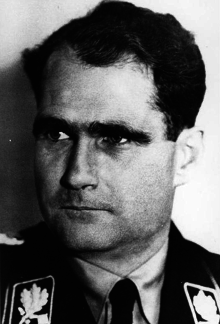
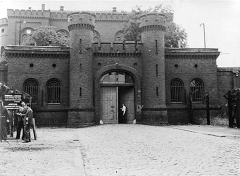
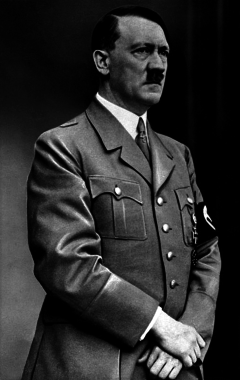
Rudolf Hess hanged himself with an electrical cord in a garden summerhouse at Spandau Prison in West Berlin on August 17, 1987. He was 93 years old, blind in one eye, and had been the sole inmate of a 600-cell prison for 21 years, guarded in monthly rotation by soldiers from the United States, Britain, France, and the Soviet Union. His death ended one of the strangest imprisonments of the 20th century and eliminated the last surviving member of Adolf Hitler's inner circle. Hess had been Hitler's deputy since the earliest days of the Nazi Party, serving as the man who transcribed Mein Kampf during Hitler's imprisonment in Landsberg in 1924. He rose to become Deputy Fuhrer, the party's second-ranking official, and administered the vast Nazi bureaucracy. Then, on May 10, 1941, he did something that bewildered the world: he flew a Messerschmitt Bf 110 solo from Germany to Scotland, apparently hoping to negotiate a peace deal with Britain before the Nazi invasion of the Soviet Union. He parachuted into a field near the Duke of Hamilton's estate, was captured by a farmer, and spent the rest of the war in British custody. At the Nuremberg Trials, Hess was convicted of crimes against peace and conspiracy to commit crimes but acquitted of war crimes and crimes against humanity. He was sentenced to life imprisonment and transferred to Spandau. The other six convicted Nazis held there were released over the following decades as their sentences expired. After Albert Speer and Baldur von Schirach were released in 1966, Hess remained alone. The Soviet Union repeatedly vetoed Western proposals to release him, viewing his continued imprisonment as a symbol of the wartime alliance's judgment against Nazism. The cost of maintaining Spandau for a single prisoner ran into millions annually. Hess's death was ruled a suicide, though his son Wolf Rudiger Hess spent years alleging that British agents had murdered his father to prevent him from revealing details about his 1941 peace mission. Spandau Prison was demolished within weeks of Hess's death, razed to prevent it from becoming a neo-Nazi shrine.
August 17, 1987
39 years ago
Key Figures & Places
What Else Happened on August 17
Pope Eusebius was banished to Sicily by Emperor Maxentius in 309 CE, reportedly for trying to reconcile Christians who had renounced their faith during the pers…
Samuel and Aron's Bulgarian forces crushed the Byzantine army at the Gates of Trajan on August 17, 986, compelling Emperor Basil II to flee for his life through…
Emperor Basil II walked into an ambush. A Bulgarian army under brothers Samuel and Aron destroyed his force at Trajan's Gate in 986, a mountain pass the Romans …
The Georgenberg Pact of 1186 merged Austria and Styria into a single political unit under the Babenberg dynasty. Duke Ottokar IV of Styria, childless and ill, s…
Karl Topia, ruler of the Albanian princedom, forged an alliance with Venice in 1386, pledging military support in exchange for coastal defense against the Ottom…
The English crushed a larger French army at Verneuil in 1424, killing the Duke of Alencon's forces and their Scottish allies. John, Duke of Bedford, commanded t…
Talk to History
Have a conversation with historical figures who witnessed this era. Ask questions, explore perspectives, and bring history to life.