Siamese Twins Arrive: Eng and Chang Fascinate Boston
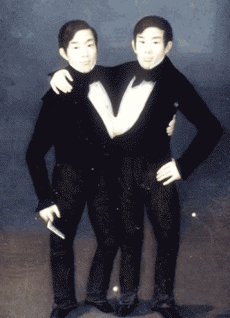
Eng and Chang Bunker stepped off a ship in Boston harbor on August 16, 1829, and the world's most famous conjoined twins began an American journey that would span five decades, generate a medical term still in use, and challenge every assumption their audiences held about the boundaries of individual identity. They were 18 years old, joined at the sternum by a band of cartilage and tissue, and they had been brought from Siam by a British merchant who planned to exhibit them for profit. Born on May 11, 1811, in a small fishing village near Bangkok, the brothers had been discovered by Scottish merchant Robert Hunter, who recognized their commercial potential. He and American sea captain Abel Coffin arranged to bring them to the United States under an exhibition contract that gave the twins little control over their own earnings. For the first several years, they were displayed before paying audiences across America and Europe, examined by physicians, and treated as objects of curiosity rather than as human beings with agency. The twins eventually gained their independence from their managers, took the surname Bunker, became American citizens, and settled in Wilkes County, North Carolina. They purchased land, acquired enslaved people, and married two local sisters, Adelaide and Sarah Yates, in 1843. The marriages were a sensation. The couples maintained separate households, alternating three-day stays at each home. Between them, Eng and Chang fathered 21 children. Their lives in North Carolina placed them at the intersection of several uncomfortable American realities. They were immigrants who became slaveholders, Asian men who married white women in the antebellum South, and disabled individuals who built prosperous farms in a society that typically confined people with visible differences to exhibition halls. They died within hours of each other on January 17, 1874, Chang first and Eng shortly after, reportedly from shock. An autopsy revealed their connecting band contained shared liver tissue. Their story gave the English language the term "Siamese twins" and opened enduring debates about medical ethics, bodily autonomy, and the nature of selfhood.
August 16, 1829
197 years ago
Key Figures & Places

What Else Happened on August 16
Wang Mang seized the title of Marshal of State, hijacking the Han Dynasty’s administrative machinery following the childless death of Emperor Ai. By positioning…
Hamdanid forces from Mosul engaged Baridi troops from Basra in a four-day battle near Baghdad beginning on August 16, 942, fighting for control of the Abbasid c…
General Nikephoros II Phokas seized the Byzantine throne after his predecessor's death, backed by the army that had just reconquered Crete from the Arabs under …
The House of Gonzaga seized control of Mantua in 1328 through a popular revolt against the ruling Bonacolsi family, beginning a dynasty that would govern the ci…
The Hongwu Emperor of Ming China received a case in 1384 involving a couple who had torn paper money during an argument. Destroying imperial currency was techni…
The Battle of Guinegate in 1513 is remembered by the English as the 'Battle of the Spurs' — not because of cavalry charges, but because the French cavalry fled …
Talk to History
Have a conversation with historical figures who witnessed this era. Ask questions, explore perspectives, and bring history to life.