Don't Ask, Don't Tell: Military's Awkward Compromise
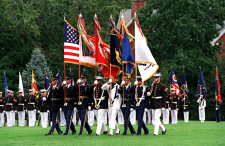
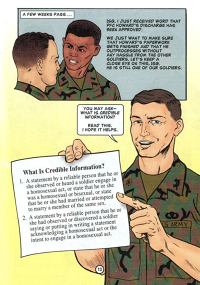
President Bill Clinton announced a policy on July 19, 1993, that satisfied almost nobody and yet governed the lives of tens of thousands of military service members for nearly two decades. "Don't Ask, Don't Tell" was born as a compromise, lived as a contradiction, and died as an embarrassment. Clinton had campaigned on a promise to lift the ban on gay and lesbian Americans serving openly in the military. When he moved to fulfill that pledge shortly after taking office, the backlash was immediate and fierce. The Joint Chiefs of Staff, led by Chairman Colin Powell, opposed the change. Senator Sam Nunn held hearings featuring testimonials from service members warning that openly gay troops would destroy unit cohesion and morale. Congressional opposition was strong enough to override a presidential order. The resulting policy attempted to thread an impossible needle. Gay service members could continue serving as long as they concealed their sexual orientation. Military officials could not ask about sexuality or investigate rumors without credible evidence of homosexual conduct. In theory, the policy protected closeted service members; in practice, it created a system of enforced dishonesty backed by the threat of discharge. Over the policy's seventeen-year lifespan, approximately 13,500 service members were discharged under DADT, including dozens of Arabic linguists, intelligence analysts, and other specialists whose skills the military desperately needed during two simultaneous wars. Investigations continued despite the policy's restrictions, and the mere accusation of homosexuality could end a career. Service members lived in constant fear that a personal relationship, an overheard phone call, or a vengeful colleague could trigger an investigation. Congress repealed DADT in December 2010, with full implementation taking effect in September 2011, ending a policy era in which the military demanded integrity from its ranks while simultaneously requiring thousands of its members to lie about who they were.
July 19, 1993
33 years ago
Key Figures & Places
What Else Happened on July 19
The International Court of Justice ordered Israel to end its occupation of Palestinian territories and commanded all UN member states to stop recognizing that c…
A faulty CrowdStrike software update on July 19, 2024, triggered the largest IT outage in history, crashing an estimated 8.5 million Windows computers across ai…
A sudden thunderstorm capsized the tourist boat Wonder Sea in Ha Long Bay, Vietnam, killing at least 36 people aboard in one of the country's worst maritime dis…
Ten of Rome's fourteen districts. Gone. The fire started in shops near the Circus Maximus on July 18th, 64 CE, and burned for six days straight. Emperor Nero wa…
Flames erupted in Rome’s merchant district, consuming ten of the city’s fourteen districts and displacing thousands of residents. While Nero’s alleged musical p…
A general marched into Tarsus and declared himself emperor while the actual emperor, Zeno, still ruled in Constantinople. Leontius commanded troops in Isauria—h…
Talk to History
Have a conversation with historical figures who witnessed this era. Ask questions, explore perspectives, and bring history to life.