Continental Congress Adopts Articles of War
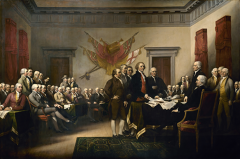
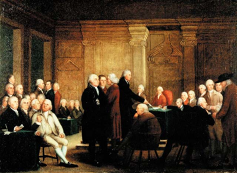
The Continental Congress adopted the Articles of War on June 30, 1775, eleven days after George Washington was appointed commander-in-chief, establishing the first uniform legal code for the fledgling Continental Army at a moment when the army itself barely existed. The code provided the legal framework for military discipline, courts-martial, and the chain of command that would hold together an improvised fighting force through eight years of war. The Articles were adapted almost directly from the British Articles of War, which in turn descended from codes dating to the reign of Richard II. John Adams, who chaired the committee that drafted the American version, argued that an army without a legal code would dissolve into a mob. The document covered everything from the punishment for desertion and insubordination to the conduct of courts-martial, the duties of sentries, and regulations governing the treatment of prisoners. Adams softened some of the harsher British provisions, reducing the maximum number of lashes from the British standard of 1,000 to 39. The timing was critical. When Congress adopted the Articles, the Continental Army was little more than a collection of New England militia units besieging Boston, each operating under its own colony’s regulations. Soldiers elected their own officers, ignored orders they disagreed with, and went home when their short enlistments expired. Washington desperately needed a uniform code to transform these volunteers into something resembling a professional army, and the Articles gave him the legal authority to impose discipline. Congress revised the Articles in September 1776, increasing punishments and expanding the code’s scope after the initial version proved too lenient for wartime conditions. The revised Articles remained the foundation of American military law until 1806 and influenced every subsequent military legal code, including the Uniform Code of Military Justice adopted in 1950. The principle that Adams established at the very beginning, that even in wartime the military operates under law rather than arbitrary command, remains the bedrock of the American military justice system.
June 30, 1775
251 years ago
Key Figures & Places
What Else Happened on June 30
He reportedly handed over sacred scriptures to Roman authorities during Diocletian's persecution — then sat on the throne of Saint Peter for eight years anyway.…
Troops loyal to the usurper Magnentius killed the rival claimant Nepotianus in Rome on June 30, 350 AD, ending his 28-day attempt to seize imperial power. Born …
Constantine V shattered the Bulgarian army at the Battle of Anchialus, securing a decisive victory that forced the Bulgarian Khan Telets to flee. This triumph s…
He was 21 years old and already doomed. Zhu Yunwen inherited the Ming throne from his grandfather Hongwu in 1398, becoming the Jianwen Emperor — and immediately…
Swiss pikemen held their ground against the heavily armored Milanese cavalry at Arbedo, proving that disciplined infantry could dismantle the traditional domina…
Hernán Cortés lost 800 soldiers, most of his cannons, and nearly his life in a single night. June 30, 1520 — the Noche Triste, the Night of Sorrows — Aztec warr…
Talk to History
Have a conversation with historical figures who witnessed this era. Ask questions, explore perspectives, and bring history to life.